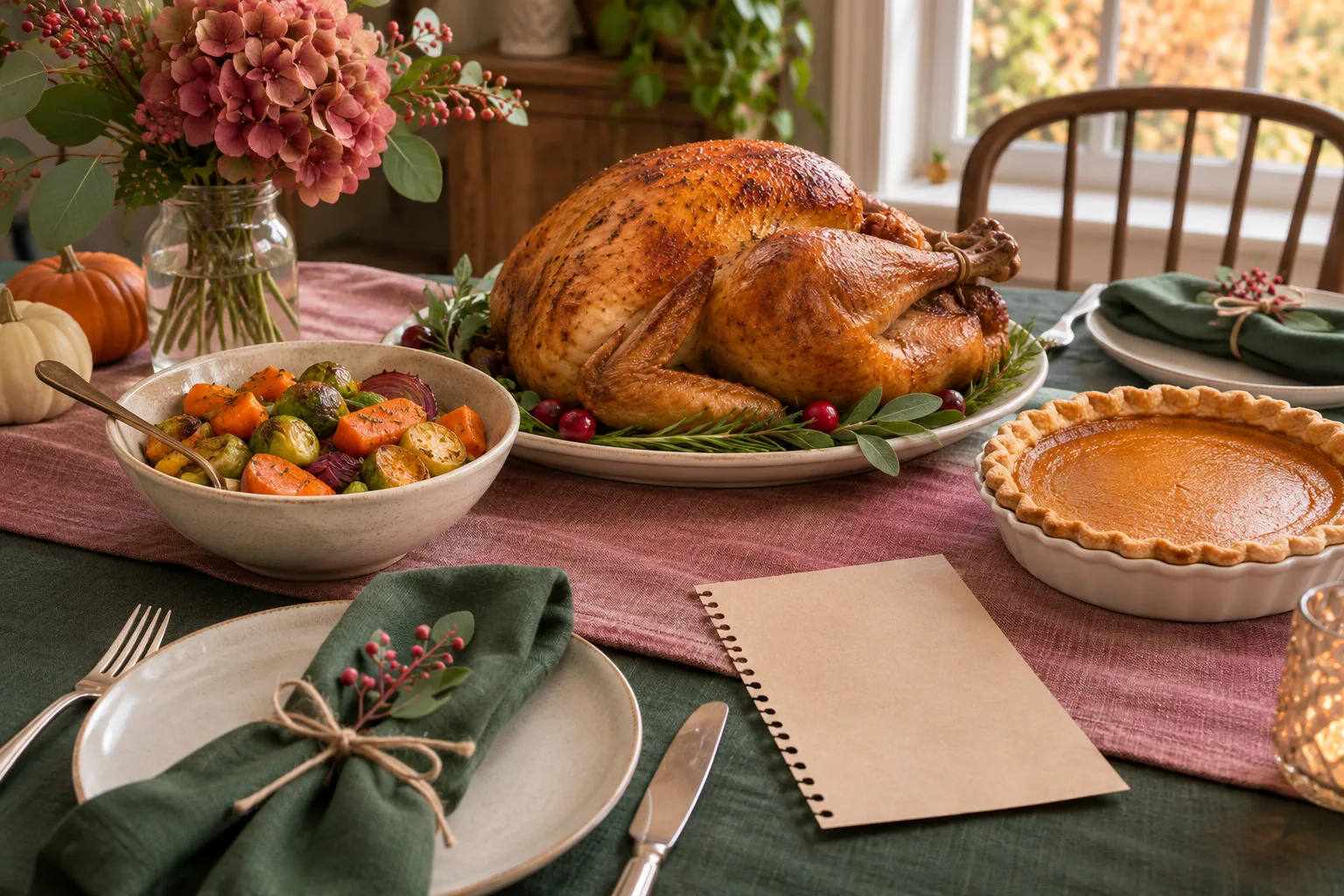
Set a cap before choosing the menu. Price what you still need and set aside any cushion before you shop.
Planning Thanksgiving dinner gets easier once you know how much you can spend. Start with a cap, choose the dishes that matter most to your table, and price the ingredients you still need. The example below gives you a simple plan to adapt to your own guest count and local prices.
Decide how much you can spend
Look at what is available after your regular bills, usual groceries and other commitments. Pick a Thanksgiving cap you can pay for from that amount. Decide whether the cap covers only dinner or also drinks, transport and anything you’ll buy to host. Write that scope at the top of your list. Consumer.gov’s guide to making a budget explains how to account for bills and expenses before deciding what you can spend.
Build the menu from what you have
Make a quick pass through your pantry, fridge and freezer. Look for ingredients that cover more than one dish. If you already have potatoes and butter, mashed potatoes might need little extra spending. Pick a main dish, the sides your guests actually look forward to, and one dessert. Check dietary needs and the final guest count before buying.
If guests offer to bring something, agree on a specific dish and how many people it should serve. You can cross it off the host’s list once someone confirms. Plan a simple fallback if a dish falls through.
Try a $50 food budget example
| Food | Cap |
|---|---|
| Turkey or other main | $24 |
| Sides | $18 |
| Dessert | $8 |
| Total | $50 |
These are sample spending limits. Price the quantities you need at your own store. The example allocates the entire $50, so a $28 main leaves $22 for sides and dessert. If you want a $5 cushion, hold it back first and plan food categories that total $45. Give drinks, delivery fees or other extras their own line if your cap includes them.
Price the cart before checkout
Write the estimated checkout price beside each item. Compare the whole package price against your cap, then use unit prices to compare sizes where helpful. A bulk package only works if the upfront cost fits and you have a use for the rest. Check store discounts for minimum spend or membership requirements.
If the total is high, decide what matters most before you shop. You might keep the main dish, swap a side for one you can make from the pantry, and replace a second dessert with something a guest has offered to bring. Update the estimate and check the total again.
Keep the plan on one page
Use four columns in a notebook or spreadsheet: Item, Estimated cost, Actual cost, and Who’s bringing it. Record the actual total after shopping so you have a starting point for the next gathering. If you shop over several trips, subtract each receipt from the cap before making the next list.
Before you leave for the store, check three things: the guest count, what is already covered and the amount still available. For everyday grocery planning, see the grocery list on a budget.
A template to consider
Choose the format and scope that match your routine; you do not need all of these products. Check the current listing, included files and setup requirements before buying.
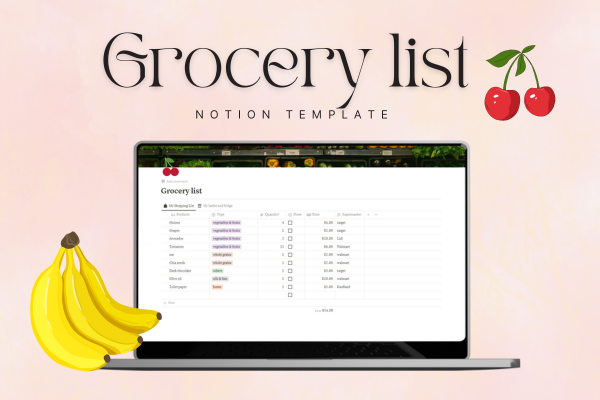 Notion template
Grocery Shopping List Notion Template
A Notion template with categorized shopping lists, meal planning and grocery budget tracking. It may suit a household planning meals and spending together.
View the product and included files →Questions people ask
What if the $50 example is too low for my guest count?
Price the portions you need first. If the estimate exceeds your cap, simplify a dish or agree on a contribution from a guest before buying.
How do I keep a cushion in the budget?
Set aside the cushion before you price the menu. With a $50 cap and a $5 cushion, your planned purchases can total up to $45.
Written by Calm Budgets