Envelopes are for decisions you make at the checkout. Bills that pay themselves need a bills account, not an envelope.
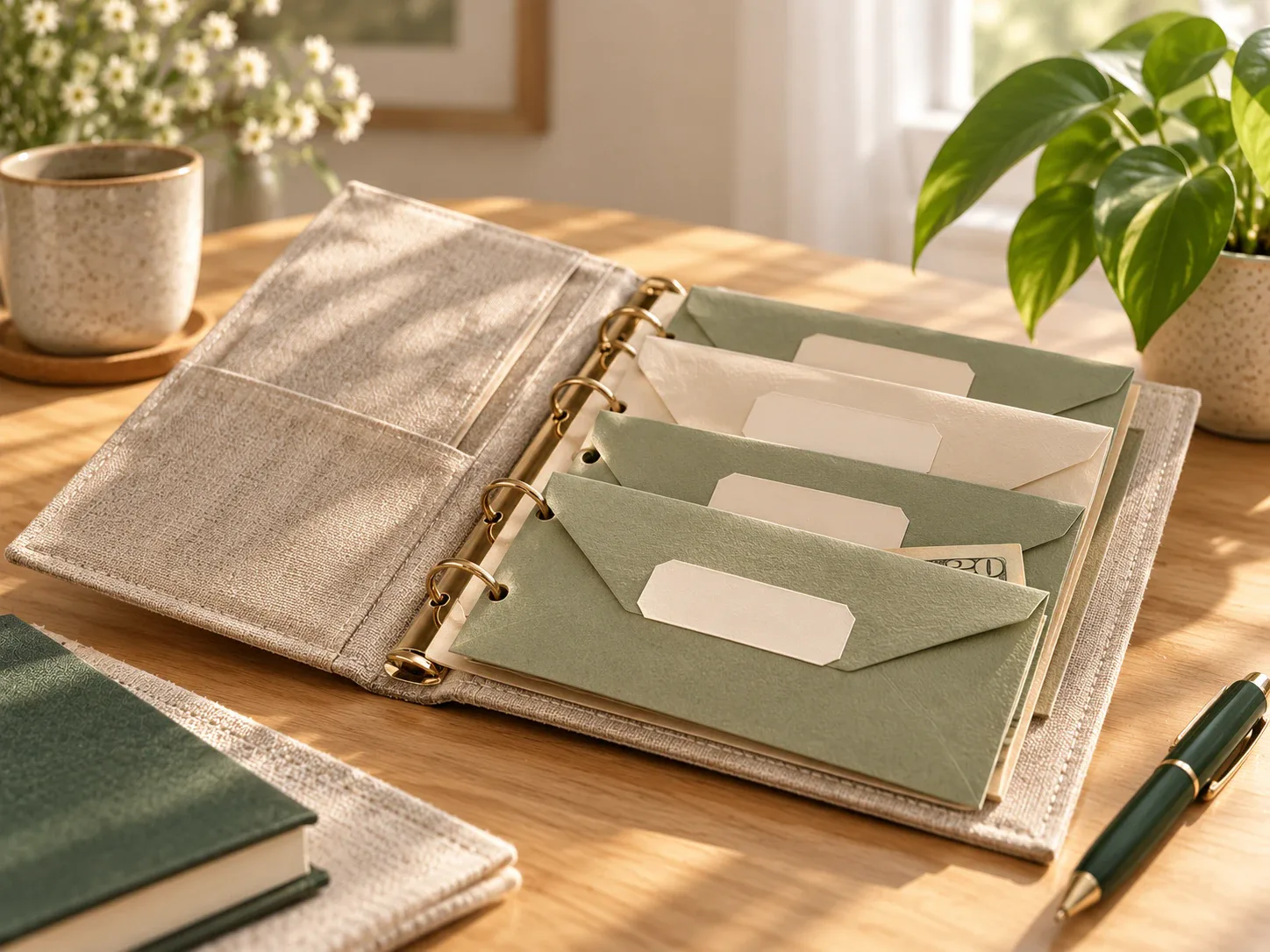
Cash stuffing looks simple on Pinterest: pretty envelopes, neat labels, bills tucked inside. The part the photos skip is the decision that actually determines whether it works — which categories get an envelope, and which do not.
This guide is about choosing those categories well, whether you use physical cash or track the same envelopes digitally.
What cash stuffing really does
Cash stuffing splits your flexible spending into labelled envelopes at the start of each pay period. When an envelope is empty, spending in that category stops until the next refill. It works because the limit is physical and visible — you can feel the envelope getting thinner.
It is best suited to flexible, frequent spending. It is poorly suited to bills that are paid automatically from a bank account.
Envelopes are for decisions you make at the checkout. Bills that pay themselves do not need an envelope — they need a bills account.
Start with four to six core categories
- Groceries: the most common envelope and usually the most useful.
- Eating out and coffee: where small purchases add up fastest.
- Gas or transport: frequent, variable, and easy to track in cash.
- Personal spending: clothes, hobbies, small treats — guilt-free once it is planned.
- Household: cleaning supplies, toiletries, small home items.
Five well-used envelopes beat fifteen half-used ones. Add categories only when a real pattern keeps showing up in your spending.
Add a few sinking fund envelopes
Many people use extra envelopes for predictable non-monthly costs: gifts, car maintenance, holidays, annual subscriptions. These fill up slowly and are only emptied when the expense arrives. They are the difference between "December broke my budget" and "December was already paid for."
How to set the amount for each envelope
Look at the last two or three months of real spending in each category and start with that average. Do not start with the amount you wish you spent. After a month, lower the envelopes that always have money left and raise the ones that run out early.
Cash stuffing without physical cash
If carrying cash is not practical, the same system works digitally: each envelope becomes a category with a set amount, and every purchase is logged against it. You lose the physical feel, but keep the core rule — when a category is empty, that spending waits.
A refill-day routine
- Count what is left in each envelope before refilling.
- Decide what leftover money does — roll over, move to savings, or move to a sinking fund.
- Refill each envelope to its planned amount.
A realistic example
Imagine five weekly envelopes: groceries $120, eating out $40, gas $50, personal $30, household $20. After three weeks, eating out is always empty by Thursday and household always has $10 left. Moving $10 from household to eating out makes the plan match real life instead of fighting it. This is an illustrative example, not a reported personal result.
What usually goes wrong
- Too many envelopes on day one. Start small and add only what you need.
- Envelopes for automatic bills. That creates extra handling with no benefit.
- Borrowing between envelopes without writing it down. Move money deliberately, not quietly.
- Amounts based on hope. Use real averages, then adjust.
Tracking your envelopes digitally
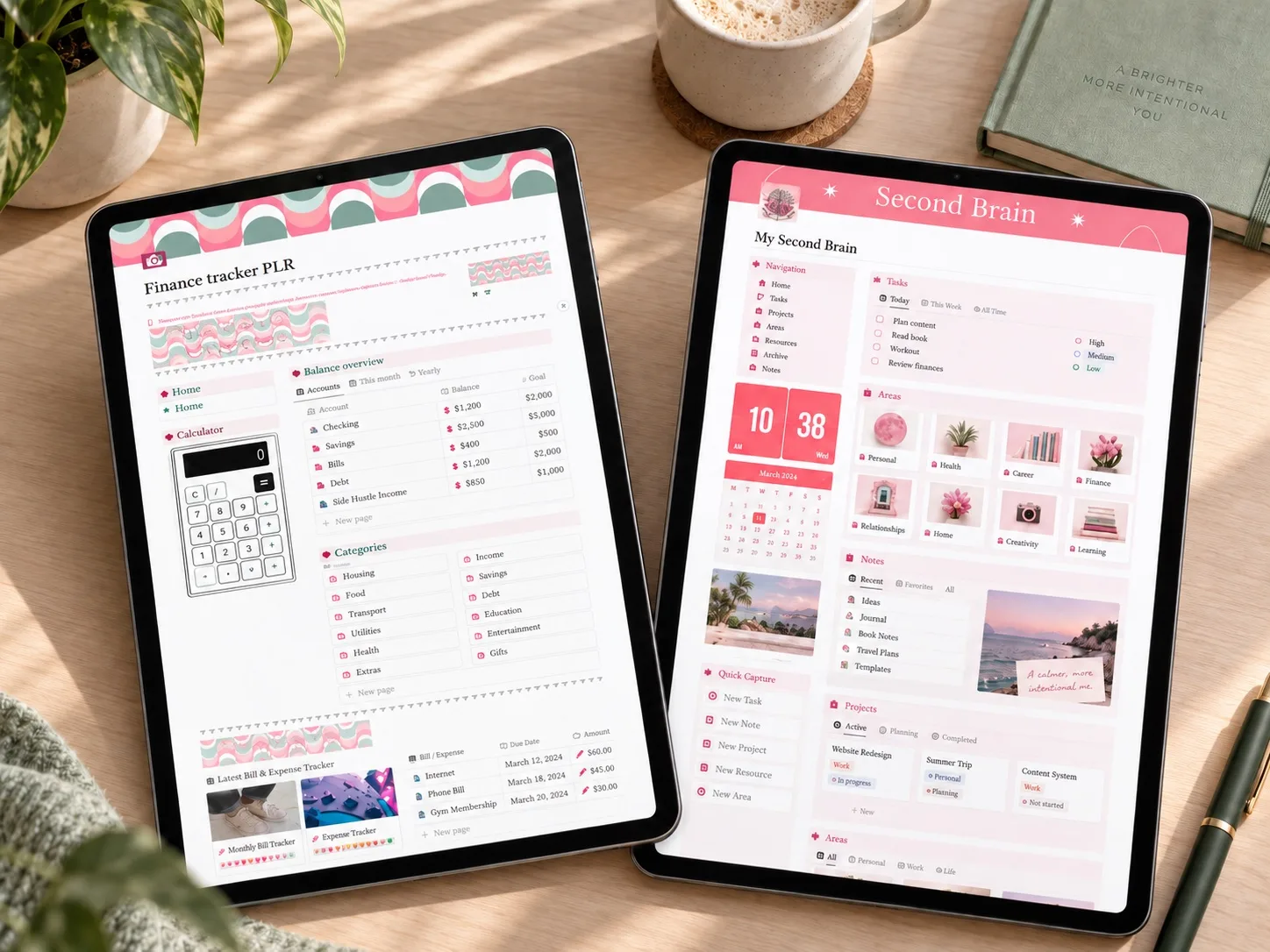
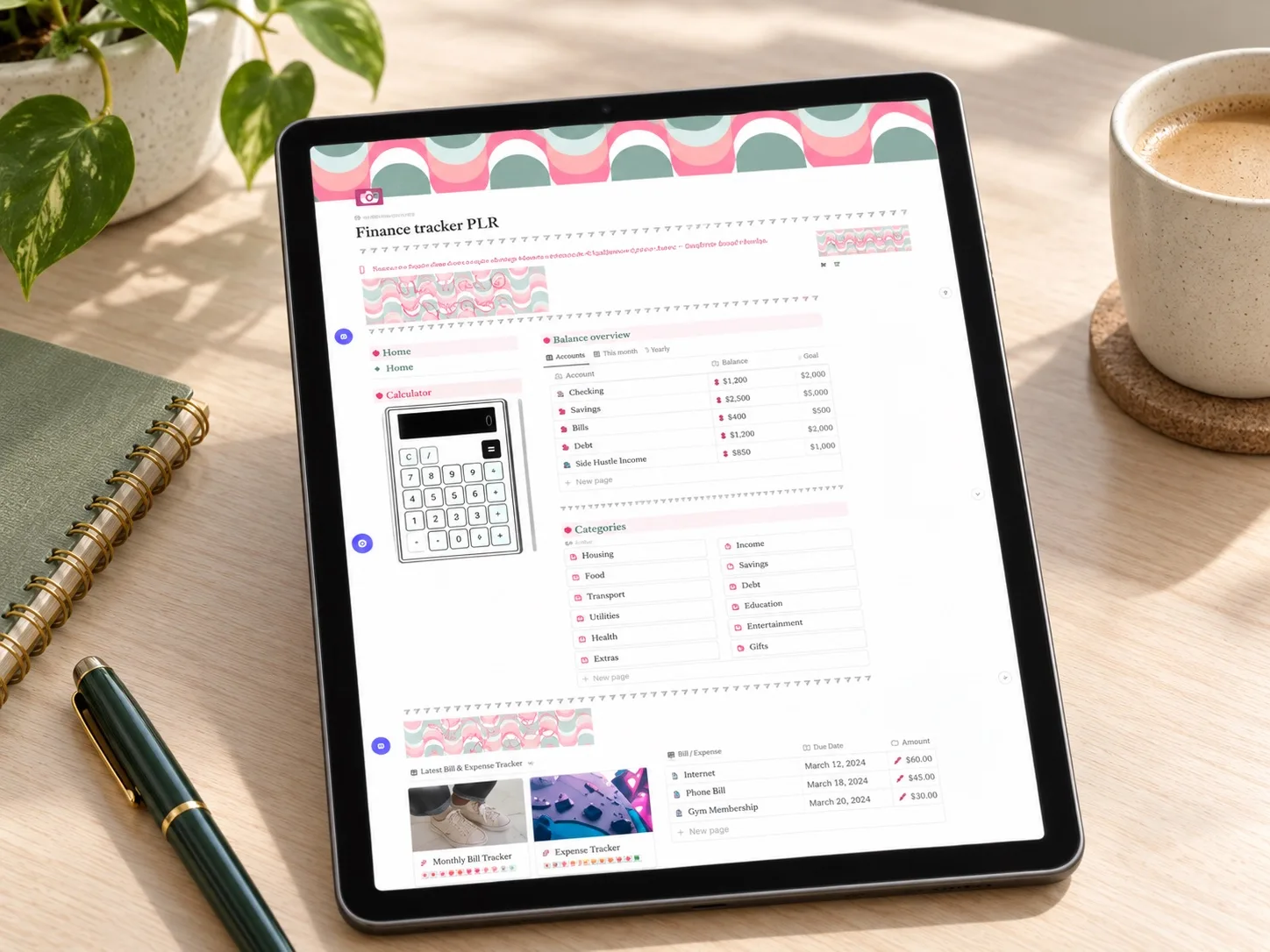
If you prefer to run cash stuffing as digital categories, or want a record alongside physical envelopes, a focused Notion finance tracker covers the basics:
 Digital envelopes
PLR Finance Tracker
Editable categories, an income and expense log, and a savings tracker — enough to run each envelope as a digital category with a visible balance.
Read the planner guide →Questions people ask before starting
Is cash stuffing safe?
Keep only the amount you need for the current period at home, and store sinking fund money in a bank account if the amounts grow.
What happens to leftover envelope money?
Choose one rule and stick to it: roll it over, send it to savings, or add it to a sinking fund.
Can couples share envelopes?
Yes, as long as both know the amounts and the refill day. Shared categories work best with a short weekly check-in.
Start with one envelope this week
Pick the category where spending surprises you most — often eating out — and give it one fixed weekly amount. Once that envelope feels normal, add the next one.
Written by Calm Budgets