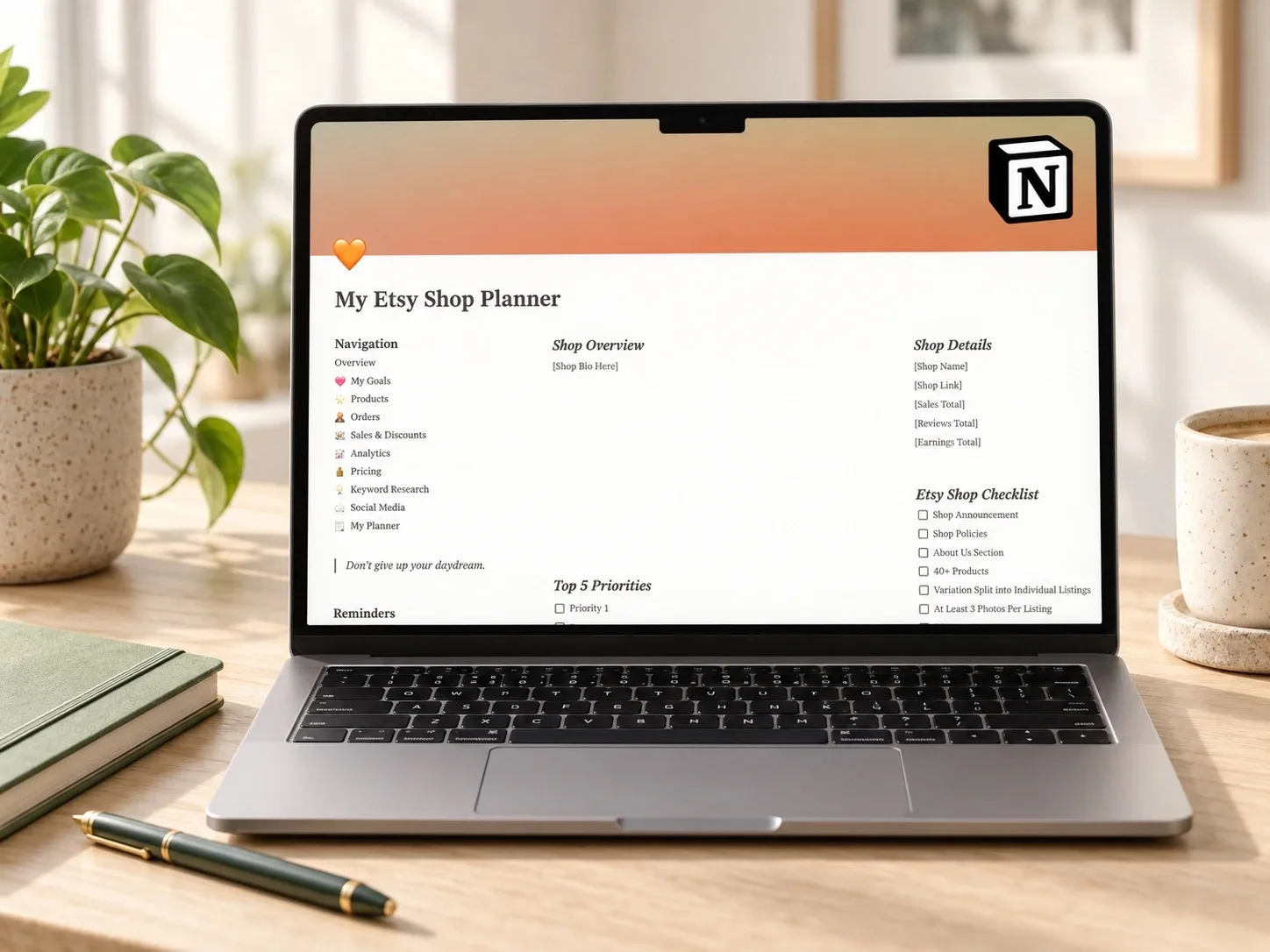
A planner will not create money, but it can turn a large savings target into visible decisions: what to change, what to transfer, and what to review each week.
A budget planner cannot create an extra $1,000 by itself. What it can do is show you which decisions repeat, which bills are negotiable, and how much of a large goal needs to come from spending changes, additional income, or both.
This guide turns a $1,000 monthly savings goal into a practical 30-day plan. The figures are examples, not a promise: your version may be $100, $400, or $1,000 depending on your income, fixed costs, household, and starting point. The useful part is the method.
First, define what “save $1,000” means
Decide whether you want to save $1,000 in total each month or find an additional $1,000 beyond what you already save. Those are different targets. Write one sentence at the top of your planner: “By the last day of this month, I will transfer $1,000 to my emergency fund.” A named destination is easier to protect than money left vaguely “unspent.”
Check the math before changing anything. Subtract essential fixed costs, minimum debt payments, and realistic essentials from monthly take-home income. If the remaining amount is less than $1,000, cutting small comforts will not close the gap. You may need a smaller first target, a longer timeline, lower fixed costs, or an income plan.
Build the goal from your actual margin. Do not use debt, skip essential bills, or set an unrealistically low food budget just to make a planner total look right.
Build a 30-day spending baseline
Open the last full month of transactions and place each expense into a small number of categories. Six to ten categories are enough. Start with housing, utilities, groceries, transport, debt, subscriptions, eating out, shopping, and everything else. A perfect historical budget is not required.
Mark every category as fixed, flexible, or irregular. Fixed costs need a contract or larger decision to change. Flexible costs can change this week. Irregular costs—annual renewals, gifts, repairs, school expenses—need a monthly set-aside even when they did not appear last month.
Then compare what you thought you spent with what actually left your accounts. The difference is often more useful than the total. A $14 lunch is not the issue by itself; a routine that quietly turns into $280 a month deserves a deliberate decision.
Create your $1,000 savings map
Do not demand the full amount from one category. Build it from several changes that can survive beyond the first enthusiastic week. Here is an illustrative map for someone who already transfers $250 a month and wants to reach a total of $1,000.
| Monthly move | Example change | Amount |
|---|---|---|
| Keep the existing habit | Current automatic savings transfer | $250 |
| Cancel or downgrade | Two subscriptions and one mobile-plan change | $90 |
| Plan food before the week | Less delivery and two fewer restaurant meals | $220 |
| Shop groceries with a list | Use what is at home and reduce waste | $160 |
| Change transport choices | Combine errands and reduce ride-hailing | $110 |
| Add a waiting period | Delay nonessential shopping for 72 hours | $95 |
| Review recurring bills | Compare insurance or renegotiate a service | $75 |
| Planned monthly saving | Seven smaller moves working together | $1,000 |
Your categories will be different. If the spending side only produces $600, write the remaining $400 as a separate income target rather than hiding the gap. Overtime, a freelance project, selling unused items, or a benefits review may be part of the plan, but only count income after it is received.
Use the planner for four focused weeks
Week 1: find the leaks that repeat
List every subscription, membership, renewal, and recurring payment with its next charge date. Cancel what you no longer value, but also look for services you want to keep at a lower tier. Record the confirmed monthly difference in the planner. A cancellation you intend to make is not savings yet.
Week 2: plan the categories that change daily
Give groceries, eating out, transport, and personal spending a weekly amount. Divide the monthly limit by 4.3 rather than four so the plan reflects an average month. Before each new week, check the remaining total and plan around the calendar: late workdays, birthdays, travel, or school events.
Week 3: create friction before optional purchases
Write wanted items on a 72-hour list instead of buying them immediately. Include the price and what the purchase would delay. This is not a ban; it is a pause that lets the savings goal compete fairly for your attention.
Week 4: transfer the result and adjust
Move the planned amount to savings as soon as income arrives when that is safe for your cash flow. At month-end, compare planned savings, money actually transferred, and any amount later moved back. The last figure is the honest result. Keep the changes that worked and replace the ones that made the month impossible.
A realistic worked example
Imagine a household with $5,400 in monthly take-home income. Essential bills, minimum debt payments, groceries, and transport normally use $4,150. The household has been saving about $250 and spending the remaining $1,000 across delivery, shopping, subscriptions, and unplanned purchases.
The planner does not label that entire $1,000 as waste. It helps the household choose $750 of changes it can tolerate while preserving the existing $250 transfer. After the first month, it transfers $1,000 but finishes with $910 saved because of a car repair. That is not failure: the repair is recorded, the savings are real, and the plan can be adjusted. In month two, a new repair sinking fund prevents the same type of expense from erasing the goal.
Three numbers that tell the truth
The ten-minute routine that keeps it alive
A budget works better as a short feedback loop than as a document you complete once. Choose one weekly time and keep the review small:
- Update the current balance in each flexible category.
- Look at bills and events due before the next review.
- Record any savings transfer already completed.
- Choose one adjustment for the coming week.
If a category goes over budget, do not erase it or quietly borrow from next month. Decide where the difference will come from and record that trade-off. The planner is useful because it shows decisions, not because every cell stays green.
What usually makes the plan fail
- Starting with an aspirational budget. Use a real month first, then change it.
- Cutting every pleasant expense. A plan with no room for real life is hard to repeat.
- Counting planned cancellations too early. Record savings only after the bill changes.
- Ignoring irregular expenses. Create monthly sinking funds for costs that will return.
- Tracking without transferring. Move saved money to its destination so it is not spent twice.
- Using too many categories. Track at the level where you can still make a decision.
Three planner styles to consider
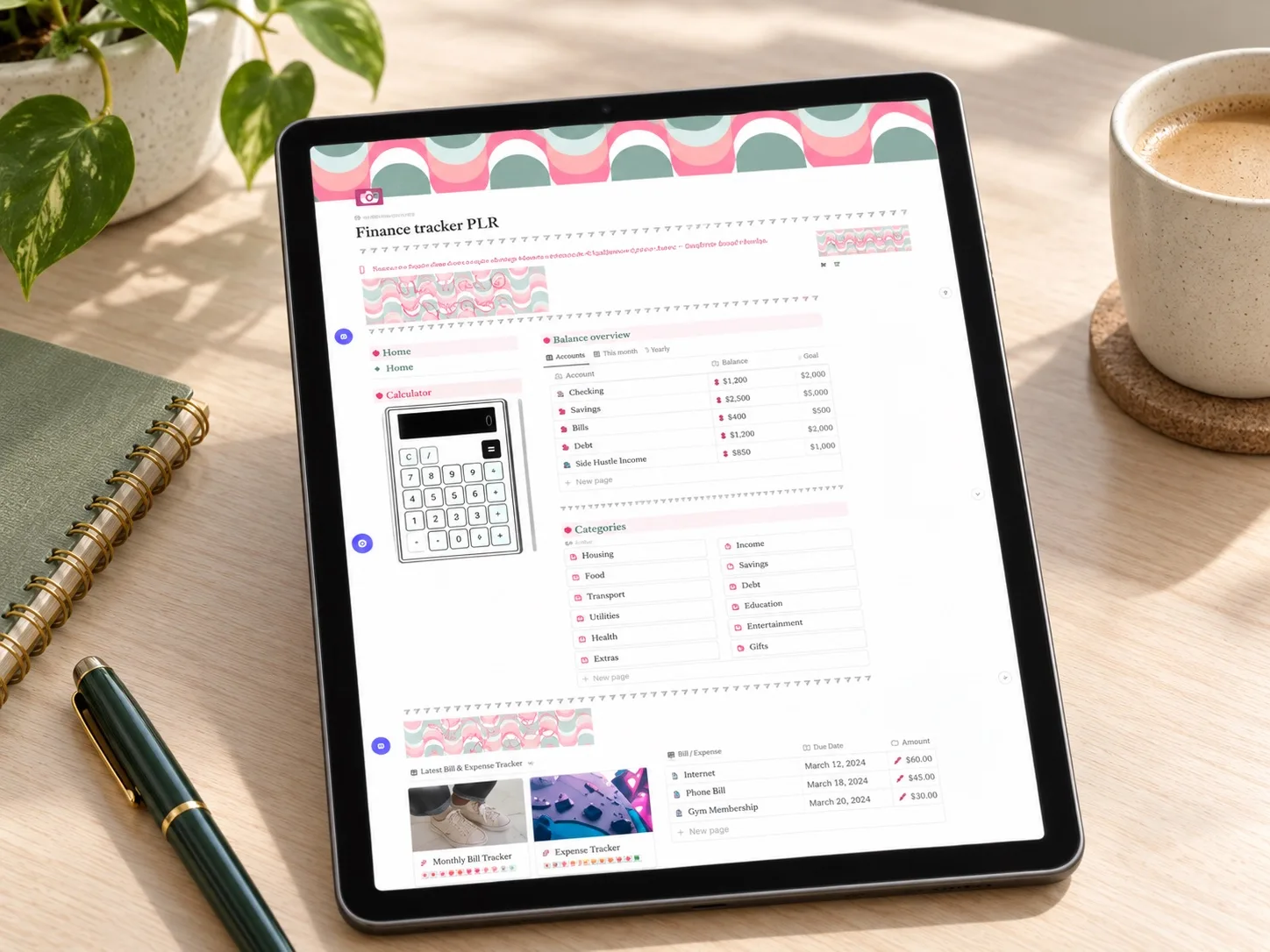 Focused finance
PLR Finance Tracker
A focused Notion budget template for tracking income, expenses, customizable categories, savings goals, financial tasks, and planned purchases. It may suit someone who wants one personal finance dashboard for the weekly routine described above.
Read the planner guide →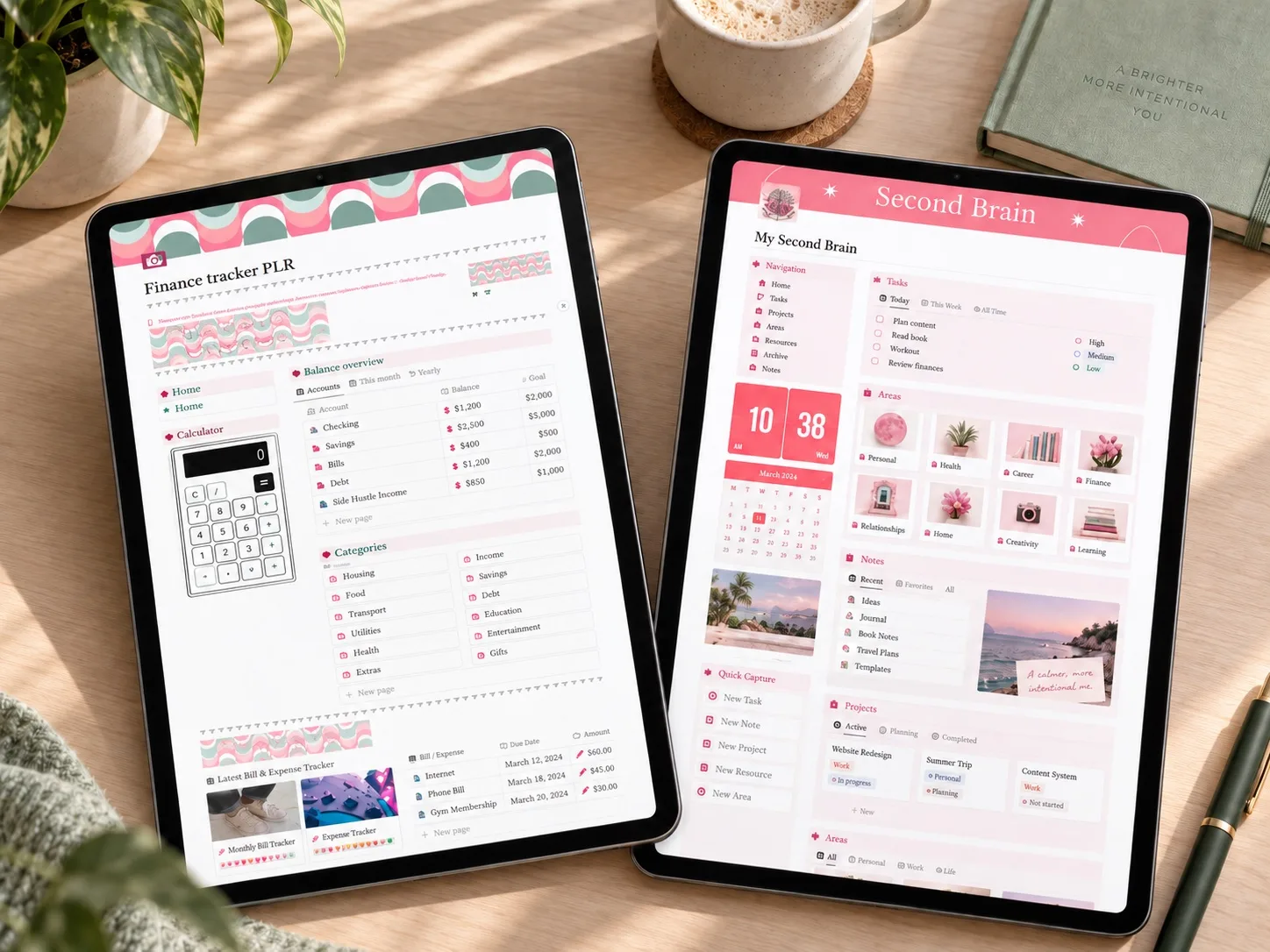 Money + organization
Finance Tracker + Second Brain
A broader Notion bundle pairing an income and expense tracker with a pink Second Brain workspace for tasks, projects, notes, resources, and personal areas. The extra structure helps only if you plan to use both parts.
Read the planner guide →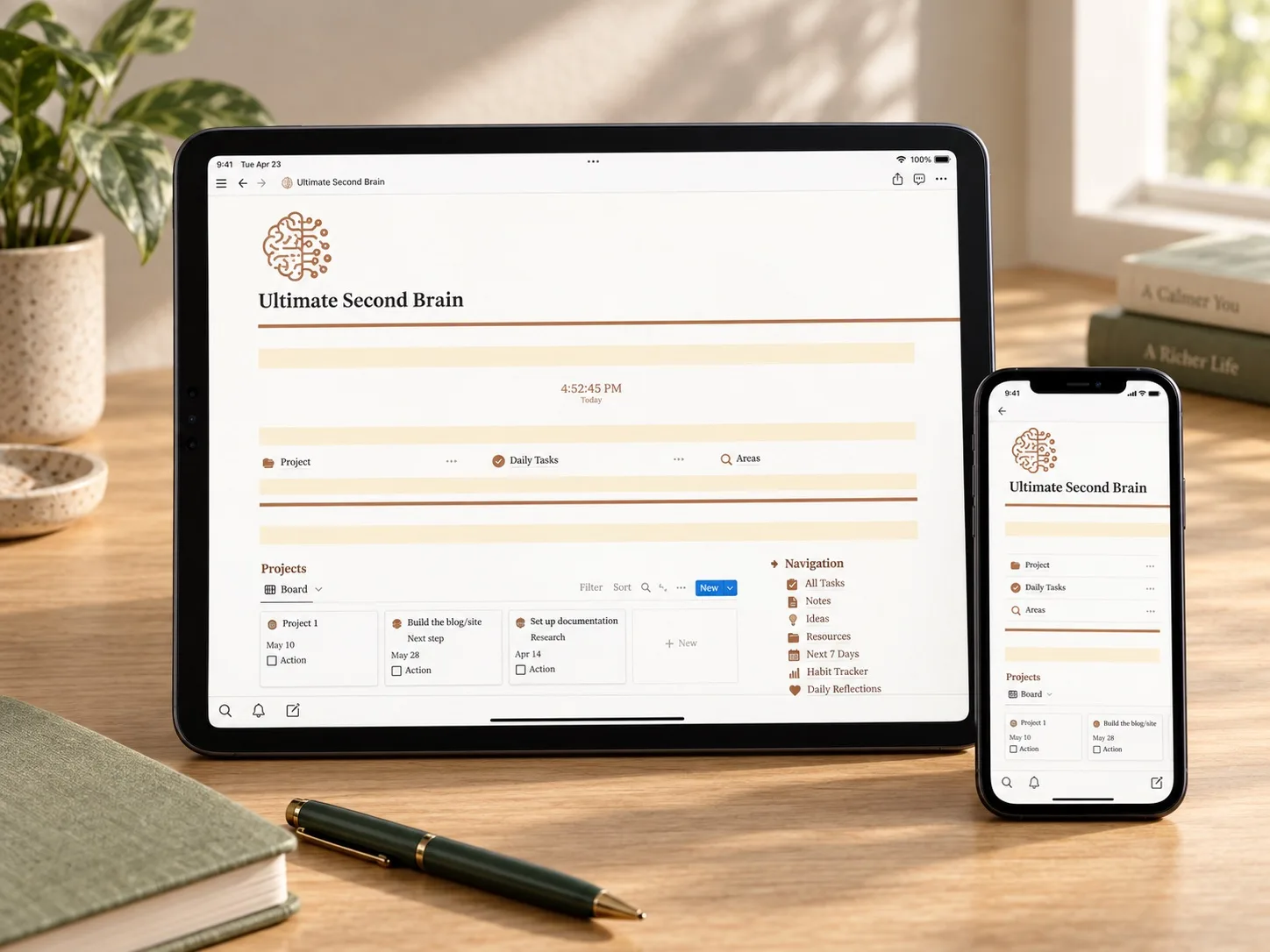 All-in-one workspace
Ultimate Second Brain
An all-in-one Notion dashboard for daily tasks, projects, notes, resources, habits, personal finances, study, and client work. It is the broadest option for readers who want several areas of life inside one workspace.
Read the planner guide →Questions people ask before starting
Do I need Notion to use this method?
No. The same structure works in a paper budget planner or spreadsheet. The best format is the one you can update quickly and review every week.
What if $1,000 is not realistic for me?
Use the same process with a smaller number. A consistent $100 goal based on honest figures is more useful than a $1,000 target that requires missed bills or repeated withdrawals.
Should I pay debt or build savings first?
That depends on interest rates, minimum payments, emergency reserves, and personal circumstances. Keep minimum payments current and consider qualified financial guidance for a decision tailored to you.
How long should I track before changing the plan?
Start adjusting obvious recurring costs immediately, but use at least one complete month to judge flexible categories. Three months will show more irregular expenses and seasonal changes.
Start with one page tonight
Write the goal, the deadline, your current monthly savings, and the remaining gap. Add three categories where a change is possible and schedule the first weekly review. That one page is enough to begin.
A planner earns its place when it helps you make the next decision. Keep the numbers honest, transfer the result, and let the routine become more accurate each month.
Written by Calm Budgets