A first budget only needs to be honest, not efficient. Start by watching a real week of spending before choosing categories or a system.
The hardest part of budgeting for the first time is rarely the math. It is starting without knowing what your real numbers look like, and feeling like you need a perfect system before you are allowed to begin.
This guide skips the perfect system. It starts with three numbers you can find today, a first week of watching instead of restricting, and a routine small enough to actually keep.
Why budgeting feels harder than it should at the start
Most budgeting advice assumes you already know your categories, your average spending, and your fixed costs down to the dollar. If you have never tracked anything before, that assumption skips the actual first step: finding out what is true.
It also helps to notice that a first budget does not need to be efficient. It needs to be honest. A rough, complete picture beats a detailed plan built on guesses.
You are not building a system to follow perfectly from day one. You are building a system accurate enough to correct as you learn more about your own spending.
Start with three numbers, not a spreadsheet system
Before choosing categories, templates, or apps, find three numbers: what comes in each month after tax, what your fixed bills add up to, and roughly what is left. That is enough to know whether a budget is about finding room to save, or about closing a gap.
Fixed bills are the ones that need a contract change to move: rent, loan payments, insurance, subscriptions you have not cancelled yet. Everything else is flexible, even if it currently feels fixed out of habit.
Your first week: just watch, don't restrict
For the first seven days, record what you spend without trying to change anything yet. Write down the amount and a short description, nothing more. The goal is an honest sample, not a diet.
Most first-time budgets fail in week one because they try to cut everything at once. A week of accurate watching gives you real categories to work with instead of the ones you assume you will need.
Choose categories after you have real data
Once you have a week of real numbers, group them into five or six categories that actually appeared: something like housing, food, transport, subscriptions, and everything else. Do not create a category for money you never actually spend there.
Give each category a number based on what you saw, not on what a generic template suggests. If groceries were $95 in your one real week, your monthly estimate starts near $400, not at a number copied from somewhere else.
A ten-minute weekly check instead of a daily habit
A first budget survives longer with one short weekly review than with a daily habit most people abandon within a month.
- Update the numbers. Add anything you spent since the last check.
- Compare to your estimate. See which categories are close and which are already off.
- Adjust one thing. Change one category number or one habit, not the whole plan.
Ten minutes a week is enough to keep the picture current without turning budgeting into a second job.
A realistic example
Imagine someone who has never tracked spending starting with three numbers: $3,200 take-home pay, $2,100 in fixed bills, and roughly $1,100 left. A week of honest tracking shows $210 on food, $60 on transport, $140 on subscriptions and small purchases, and $690 unaccounted for.
Instead of panicking about the gap, the next step is simply asking where that $690 usually goes: often a mix of forgotten small charges and a few larger one-off purchases. The following week's categories get built around that answer. This is an illustrative example, not a reported personal result.
What usually derails a first budget
- Copying someone else's categories. Your spending is not their spending; build categories from your own week.
- Cutting everything in week one. A budget with no room for real life gets abandoned fast.
- Tracking daily and reviewing never. Entries without a weekly review do not turn into decisions.
- Waiting for a perfect month to start. An imperfect week of real data beats another month of guessing.
A ready-made starting point
 First budget
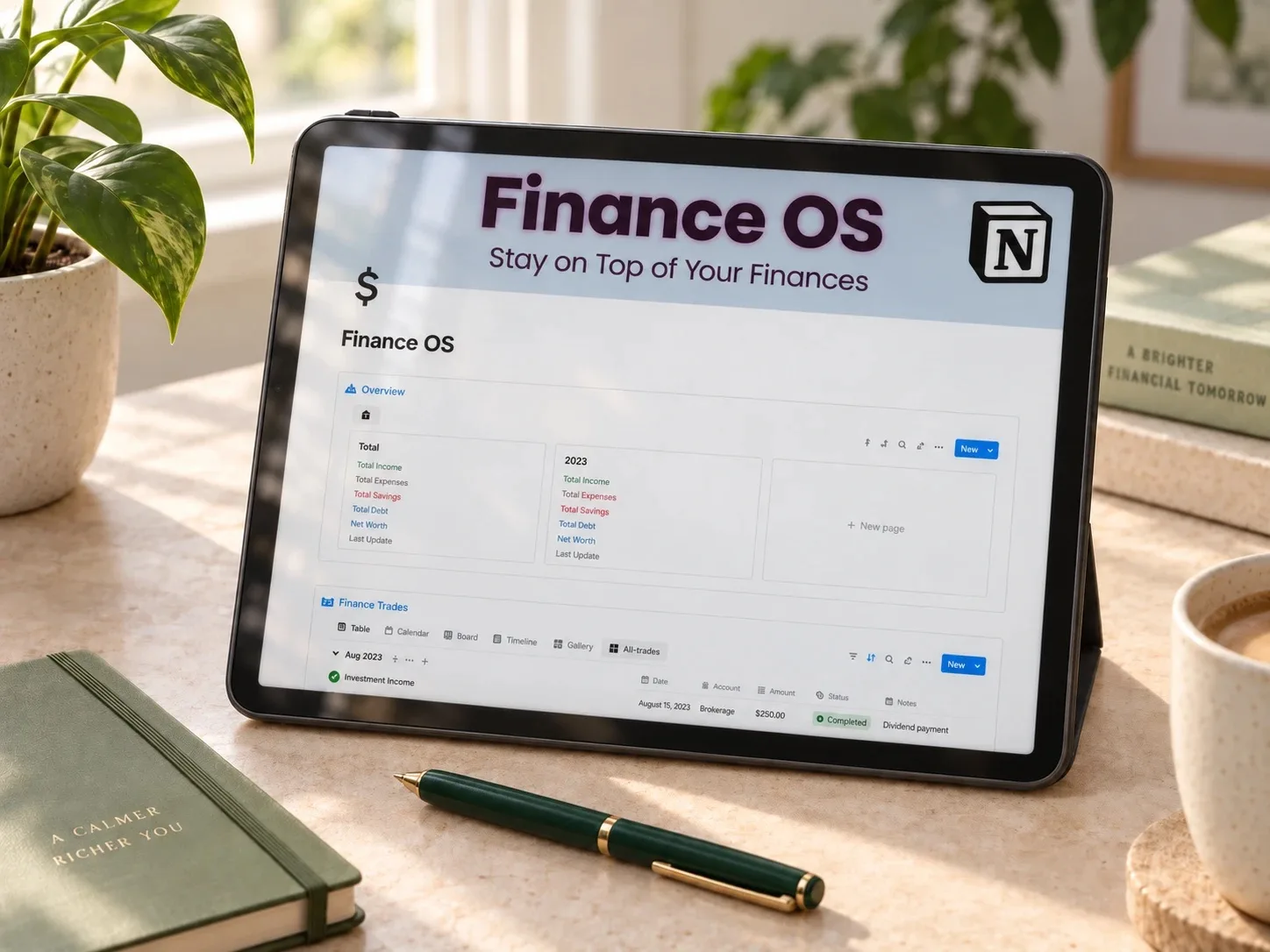
Finance OS Tracker
A Notion dashboard for income and expense logging, subscription renewal dates, account balances, and financial goals in one overview. It may suit a first-time budgeter who wants one simple place to log a starting week of spending.
Read the planner guide →Questions people ask before starting
Do I need an app or template to start?
No. A notebook or a phone note works for the first week. A template becomes useful once you know what categories you actually need.
What if my spending changes a lot month to month?
Track two or three weeks instead of one before estimating monthly numbers, and expect to adjust the estimate for the first few months.
Should I budget every dollar from day one?
No. Start by watching and grouping. A zero-based budget is easier to build once you already know your real categories.
How long until this feels normal?
Most people need four to six weekly reviews before the categories and numbers stop feeling arbitrary.
Start with one week tonight
Write down your take-home pay, your fixed bills, and what is roughly left. Then track every expense for seven days without judging any of it. That single week is what turns a vague intention into a real first budget.
Written by Calm Budgets