A holiday budget is not a gift budget. Gifts are usually only half of what December really costs.
December spending rarely goes wrong because of one expensive gift. It goes wrong because gifts, food, decorations, cards, travel, and a few events all arrive in the same four weeks, each one planned separately and none of them added up.
A calm holiday budget starts in the autumn, with one number and a simple list. This guide walks through it.
Decide one total number first
Before thinking about individual gifts, decide what the whole season can cost without creating debt or emptying savings. Look at what last December actually cost if you can — card statements from November through early January tell the honest story.
That total is the frame everything else fits inside. Without it, every individual purchase looks reasonable on its own.
A holiday budget is not a gift budget. Gifts are usually only half of what December really costs.
Split the total into categories
- Gifts: the largest line for most households.
- Food and hosting: special meals, baking, drinks, contributions to gatherings.
- Decorations: new items only — reuse what you already have first.
- Cards and wrapping: small individually, noticeable together.
- Events and activities: tickets, outings, parties you attend.
- Travel: fuel, trains, or flights to see family.
Build the gift list with a price next to every name
List every person you plan to buy for, then assign a limit to each name before you shop. Seeing the whole list at once makes it easy to notice when it is too long, and to decide on a family gift swap, a shared gift, or something handmade instead.
Record ideas throughout the autumn so you are not choosing everything in a rushed week in December.
Save for it monthly, starting now
Divide the total by the months left until December and set that aside each month in a separate place. $600 split across three months is $200 a month — much easier than finding $600 in one pay period.
A weekly holiday check
- Log what you bought this week and which category it belongs to.
- Tick off names on the gift list as presents are bought.
- Compare spent vs. planned in each category and adjust early.
A realistic example
Imagine a season total of $700: gifts $380, food $150, decorations $40, cards and wrapping $30, events $60, and travel $40. By mid-December, gifts are running $30 over. Instead of borrowing from January, $30 moves from the decorations line — last year's decorations are still in the box. This is an illustrative example, not a reported personal result.
What usually breaks a Christmas budget
- Budgeting gifts only. Food, travel, and events quietly double the total.
- Shopping without prices assigned to names. Every gift looks affordable alone.
- Starting in December. Autumn saving turns one big hit into small monthly steps.
- Not tracking as you buy. The total is only useful if it stays current.
A holiday planner with a budget built in
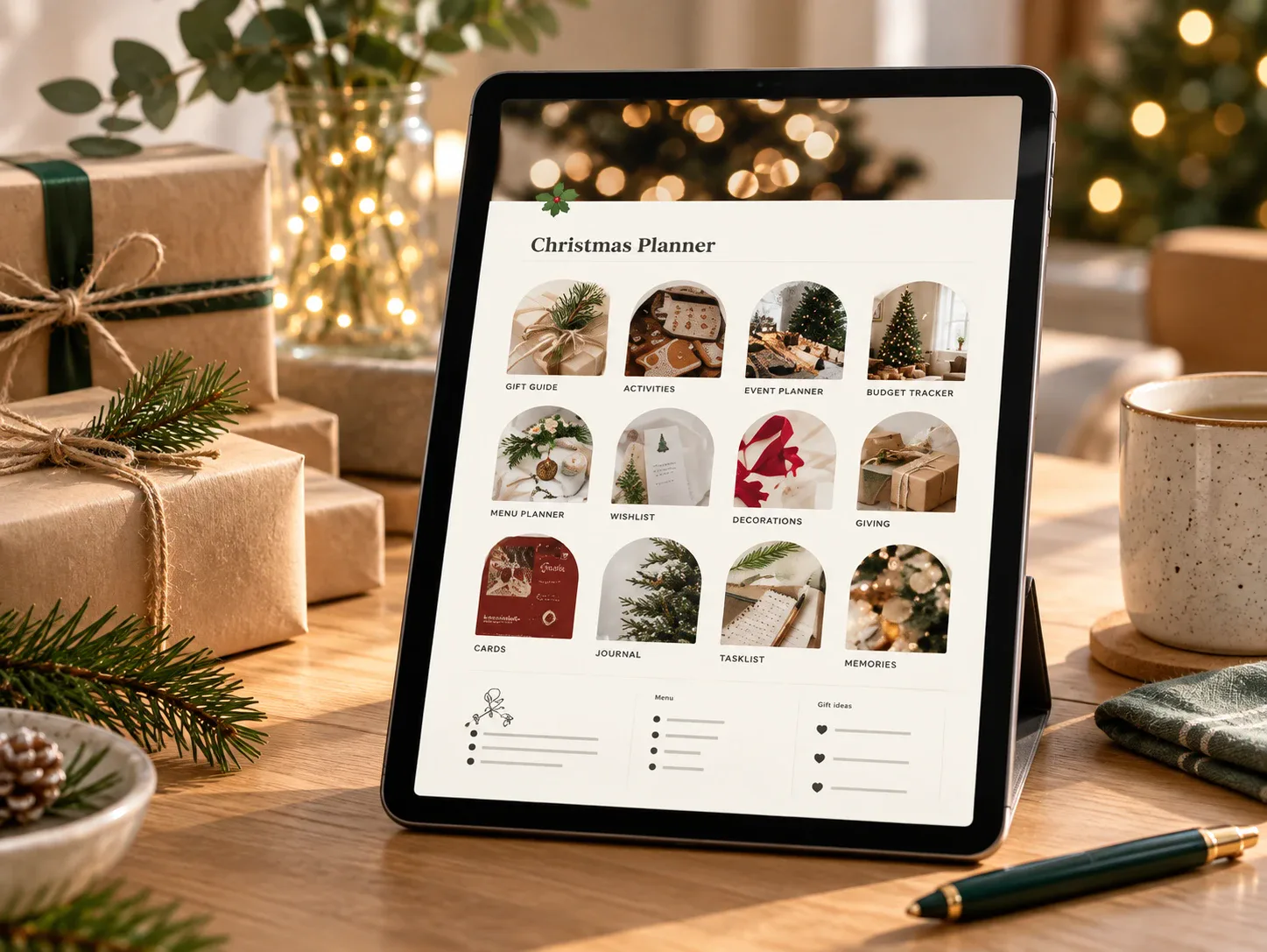
A single list can work. If you would like gifts, budget, menus, and events organized together, one Notion template is designed for the season:
 Holiday season
Christmas & Holiday Planner
A budget tracker by category, a gift tracker with prices, a menu planner, and event checklists — the whole season in one Notion workspace.
Read the planner guide →Questions people ask before starting
How much should I spend on Christmas?
Only what you can pay without new debt or touching emergency savings. Last year's real total is a useful starting point.
Is it too late to start in December?
No. A total and a gift list with prices still help, even with only a few weeks left.
How do I handle family expectations?
Suggest a gift swap or spending limit early in the autumn. Most families are relieved when someone raises it first.
Start with one number this week
Write down the total the whole season can cost. Then list the people you plan to buy for. Those two things are the foundation of a calm December.
Written by Calm Budgets