A budget grocery list is not a list of cheap food. It is a list of food you will actually eat, planned before you walk in.
Groceries are one of the few big budget categories you can change this week. But most advice jumps straight to coupons and cheap recipes, skipping the part that makes the biggest difference: going into the store with a plan and a number.
This guide is about building a grocery list that fits a budget — and a simple routine that keeps it fitting week after week.
Why grocery spending creeps up
Grocery overspending rarely comes from one expensive item. It comes from shopping without a meal plan, buying duplicates of things already in the fridge, and adding "while I'm here" items that were never on the list. The receipt looks reasonable line by line; the weekly total does not.
A budget grocery list is not a list of cheap food. It is a list of food you will actually eat, planned before you walk in.
Start with a weekly number
Look at the last four weeks of grocery spending and take the average. That is your honest starting point. If you want to reduce it, lower the weekly target by 10–15% rather than cutting it in half — a target you can hit beats one you abandon after a week.
Plan meals from what you already have
- Check the fridge, freezer, and pantry first and write down what needs using up.
- Plan four or five dinners around those items, leaving room for leftovers.
- Repeat ingredients across meals — one bag of spinach, one pack of chicken, used twice.
- Add breakfasts, lunches, and snacks you actually eat, not idealized ones.
Write the list by store section
Group items by produce, dairy, meat, pantry, and household. It makes the trip faster and makes duplicates easier to spot. Add a rough price next to anything you buy often; after a couple of weeks, you can estimate the total before leaving the house.
Rules that help in the store
- Shop with the list open and tick items off as you go.
- Allow one unplanned item, not zero — rigid rules tend to break completely.
- Compare unit prices on staples you buy every week.
- Buy store brands for basics where you cannot tell the difference.
A weekly grocery routine
- Check the kitchen (5 minutes).
- Plan meals and write the list (10 minutes).
- Shop and record the total against your weekly number.
- Note what went unused so next week's list gets more accurate.
A realistic example
Imagine a household averaging $165 a week on groceries with no plan. After three weeks of checking the kitchen first, planning five dinners, and shopping by section, the average settles around $140 — mostly from fewer duplicate purchases and less food thrown away, not from switching to cheaper meals. This is an illustrative example, not a reported personal result.
What usually breaks a grocery budget
- Planning seven perfect dinners. Plan five and leave room for leftovers and tired nights.
- Skipping the kitchen check. Duplicates are silent budget leaks.
- Shopping hungry or without a list. Both reliably raise the total.
- Not recording the receipt. Without the number, there is nothing to adjust.
A grocery list that tracks the budget too
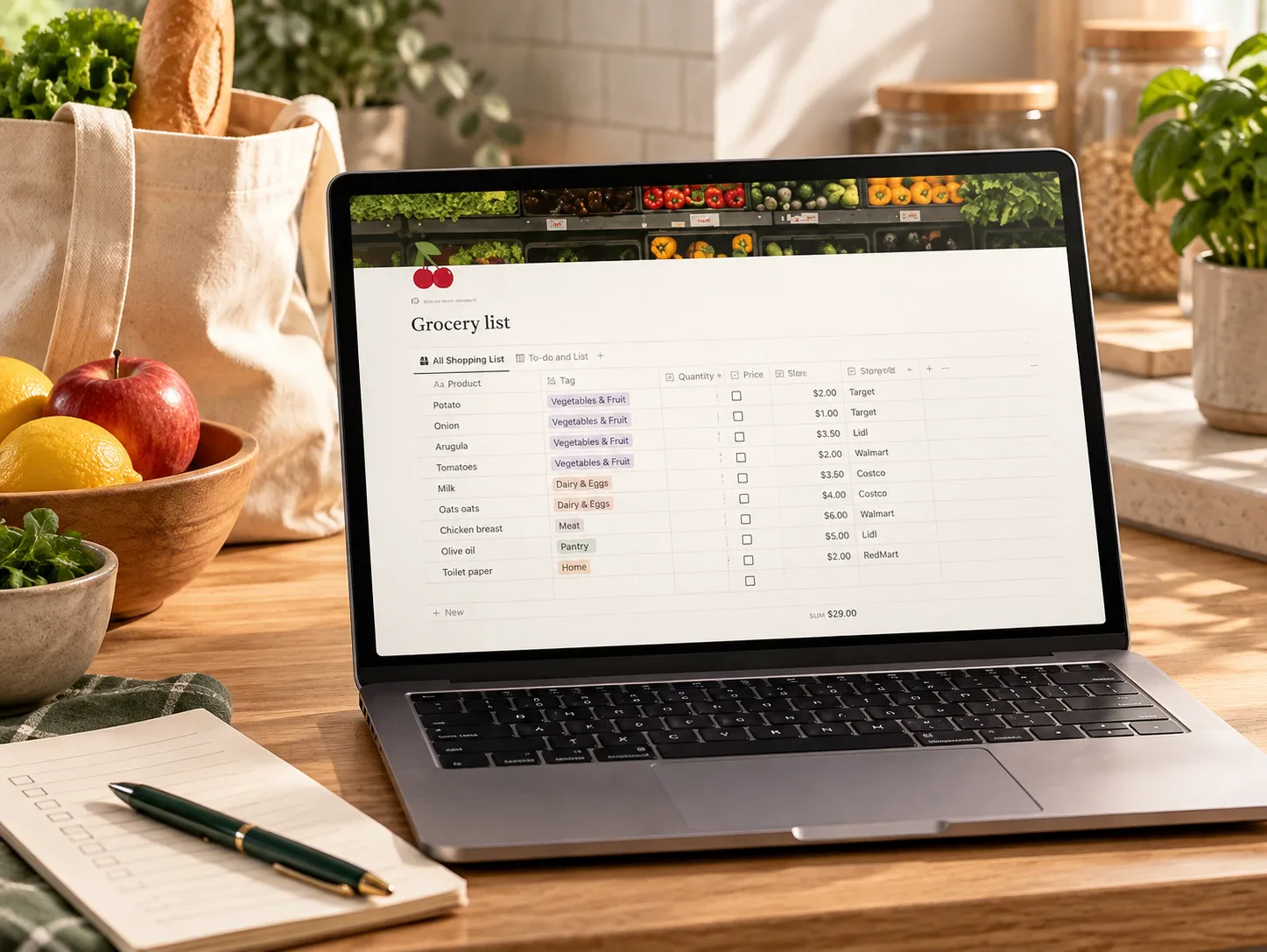
Paper lists work. If you want the list, meal plan, and budget in one reusable place, one Notion template is built specifically for this:
 Groceries and meals
Grocery Shopping List Notion Template
Categorized shopping lists, meal planning, and budget tracking in one Notion page — designed for exactly the weekly routine above.
Read the planner guide →Questions people ask before starting
How much should a household spend on groceries?
It depends heavily on location, household size, and diet. Your own four-week average is a better starting point than any national figure.
Is meal prepping required?
No. A simple plan for which dinners you will make this week does most of the work.
What about shopping for two?
Plan meals that share ingredients and freeze portions. Smaller households lose more money to food that goes off before it is used.
Start with a kitchen check tonight
Open your fridge and write down three things that need using this week. Plan two dinners around them. That is the first line of a grocery list that fits your budget.
Written by Calm Budgets