A small, specific amount changes the decision from "should I spend on this" to "how do I want to use what is already set aside."
Self-care and budgeting often get treated as opposites — one is about spending on yourself, the other about not spending. In practice, the two work better together than that framing suggests: a budget with no room for rest just gets abandoned the first time you need a break.
This is not about finding free substitutes for everything. It is about giving self-care an actual place in the budget, so it stops being either guilt-free overspending or something you skip entirely.
Why self-care needs its own line, not leftover money
Without a specific amount set aside, self-care spending happens two ways: guiltily, paid for from money meant for something else, or not at all, because there is never an "extra" moment when it feels justified. Neither is sustainable for long.
A small, specific amount changes the decision from "should I spend on this" to "how do I want to use what is already set aside." That is a much easier question to answer in the moment.
This is not about spending more. It is about deciding in advance that some of what you already spend is allowed to go toward rest, not just bills and obligations.
Pick a number that fits your real budget
Start small enough that it does not need to compete with anything essential — $10, $20, or $30 a month is enough to notice without requiring a bigger conversation about your whole budget. You can always adjust it once you see how it actually gets used.
The exact number matters less than having one. A vague intention to "treat myself sometimes" tends to either never happen or happen inconsistently in a way that feels like overspending after the fact.
Low-cost self-care that still deserves a real budget line
- A specific small purchase — a coffee out, a magazine, a bath product — chosen in advance rather than an impulse decision.
- A recurring small comfort — a single streaming subscription, a weekly flower from the grocery store — instead of several stacked ones.
- Saved-up rest — letting the monthly amount build for two or three months toward something a little bigger, like a massage or a day trip.
None of these require a large budget. They require a specific, named amount instead of vague good intentions.
A simple monthly check
- Confirm the amount is set aside. Treat it the same as any other planned expense, not as optional leftover money.
- Decide how to use it this month. Spend it, save it toward something bigger, or roll it over — all three are valid choices.
- Notice how it felt. A rushed, guilty purchase and a planned, enjoyed one cost the same amount but do very different things for you.
A realistic example
Imagine setting aside $20 a month specifically for this. In months one and two, it goes toward a coffee out and a new book. In month three, it is left untouched and combines with the next month's amount toward a $60 massage that would have otherwise felt like an indulgence to justify on its own. This is an illustrative example, not a reported personal result.
What usually breaks a self-care budget
- Setting the amount too high. If it competes with essentials, it will be the first thing cut.
- Treating it as "extra" rather than planned. That framing is exactly what leads to guilt or avoidance.
- Never revisiting the amount. A number that felt right six months ago may need adjusting as your budget changes.
Where this line item can live
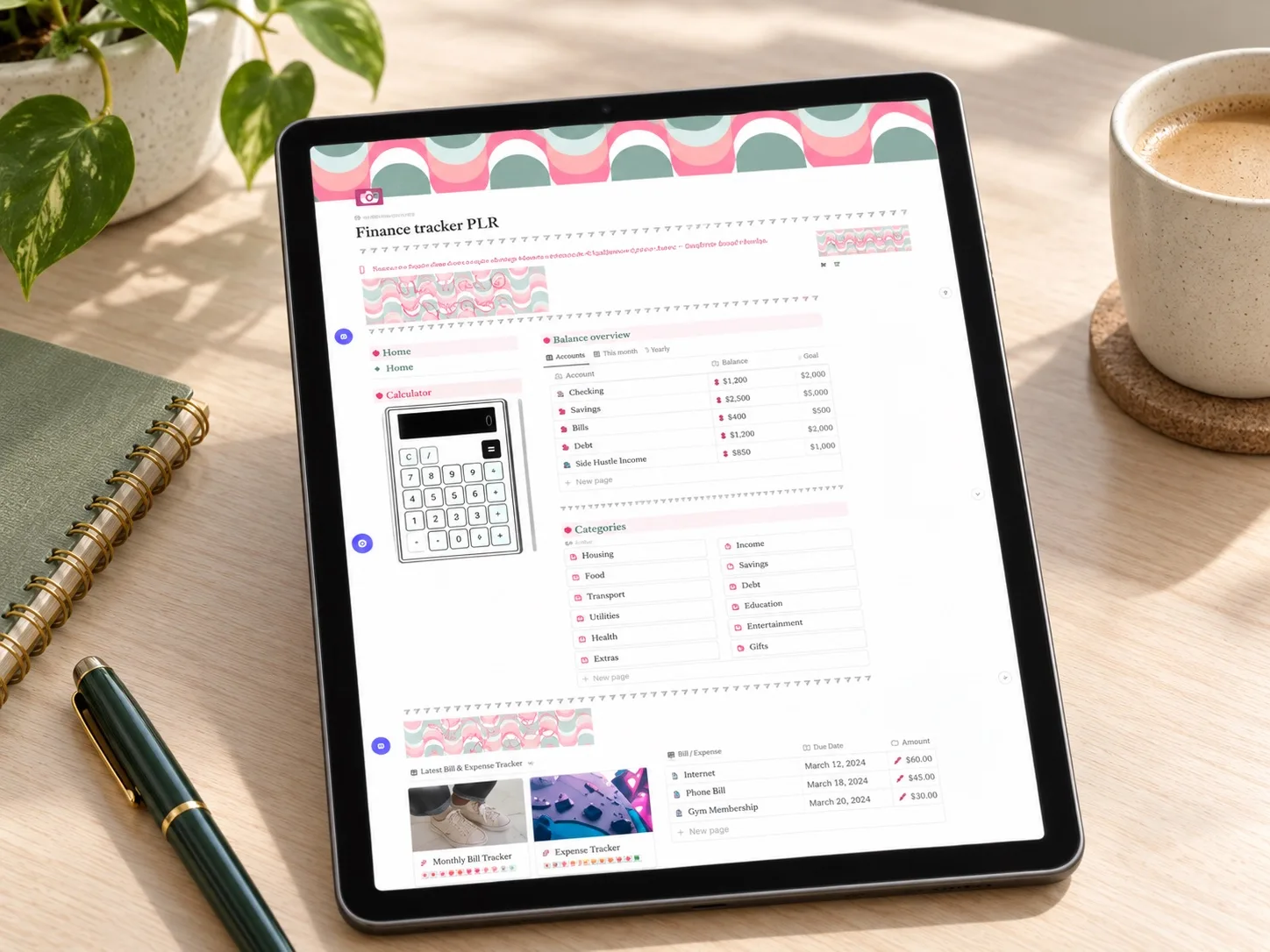
A self-care line does not need its own separate app — it fits naturally as one customizable category inside a broader finance tracker.
 Customizable categories
PLR Finance Tracker
Editable expense categories make it easy to give self-care its own visible line instead of hiding it inside "miscellaneous," alongside a savings tracker if you would rather let the amount build up first.
Read the planner guide →Questions people ask before starting
Isn't this just an excuse to spend more?
It is a specific, capped amount decided in advance — usually less than what unplanned guilty spending adds up to over the same months.
What if I cannot afford even a small amount right now?
A budget with no flexibility at all is a sign to revisit the essentials first. This line can start once there is genuinely something left over, even $5.
Should unspent months roll over?
That is a personal choice. Rolling over suits saving toward something larger; resetting monthly suits smaller, more frequent treats.
Start with one number tonight
Pick an amount you would not need to think twice about, and decide where it will live in your budget. That single decision is the whole system — everything else is choosing how to spend it each month.
Written by Calm Budgets