
If you could have written the expense on a calendar a year ago, it belongs in a sinking fund, not an emergency fund.
Most budgets do not break because of emergencies. They break because of expenses everyone knew were coming — car insurance twice a year, birthday gifts, a new pair of work shoes, the annual software renewal — that still arrive feeling like a surprise.
A sinking fund is the simple fix: set aside a small amount every month for a cost you already know about, so when it arrives, the money is already waiting.
What a sinking fund actually is
A sinking fund is a named pot of money for one predictable, non-monthly expense. You divide the expected cost by the number of months until it is due, and put that amount aside each month.
It is different from an emergency fund. An emergency fund covers what you cannot predict. A sinking fund covers what you can predict but tend to forget — which, for most households, is a much larger share of the "surprise" spending that derails a month.
If you could have written the expense on a calendar a year ago, it belongs in a sinking fund, not an emergency fund.
Find your sinking fund categories from last year
Look back over the last twelve months of statements and circle every expense that did not happen monthly but will almost certainly happen again. Common ones include:
- Car costs: insurance, registration, servicing, tires.
- Gifts and holidays: birthdays, the December season, weddings you attend.
- Annual renewals: memberships, software, domain names, subscriptions paid yearly.
- Home and health: dentist visits, glasses, small repairs, replacing an appliance.
- Personal: clothes, a haircut schedule, a trip you take every summer.
Start with three to five categories. You can add more once the first ones are running without effort.
The math is one line per fund
For each category, estimate the total cost and the months until it is due. Car insurance of $600 due in six months is $100 a month. Holiday gifts of $480 due in eight months is $60 a month. Write each one as a single line: fund name, target, due date, monthly amount.
If the total monthly amount feels too high, stretch the least urgent funds over a longer timeline or lower their target, rather than dropping the idea entirely.
Where the money actually sits
The money can live in one separate savings account, with a simple tracker showing how much of that balance belongs to each fund. You do not need a separate bank account per category — you need a clear record of which dollars are already spoken for.
What matters is that sinking fund money is not visible as "available" when you check your everyday spending balance.
A monthly five-minute routine
- Transfer the total monthly amount to your sinking fund account on payday.
- Update each fund's balance in your tracker.
- When an expense arrives, pay it from the matching fund and note what is left.
A realistic example
Imagine four funds: car insurance ($100 a month), holidays ($60), annual subscriptions ($25), and clothes ($40) — $225 a month in total. When the $580 insurance bill arrives in month six, $600 is already sitting in that fund. The regular budget does not notice. This is an illustrative example, not a reported personal result.
What usually breaks sinking funds
- Too many categories at once. Twelve funds on day one is a spreadsheet project, not a habit.
- Borrowing between funds without noting it. Moving money is fine; forgetting that you moved it is not.
- Keeping the money in your spending account. If it looks available, it eventually gets spent.
- Never updating the estimate. Insurance and gift costs change; adjust targets once a year.
A ready-made place to track the funds
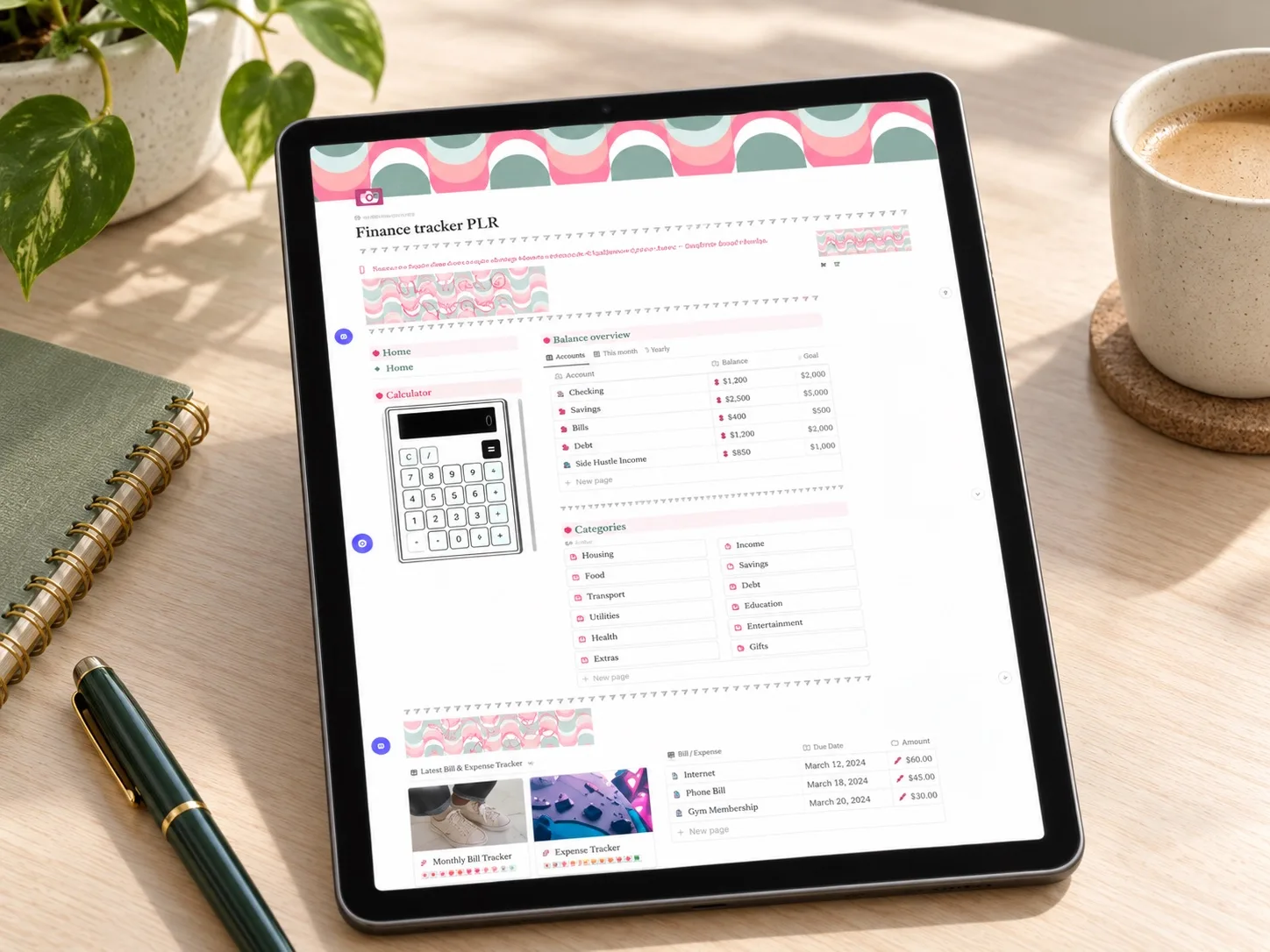
If you would rather not build the tracker from scratch, a focused Notion finance template covers the basics sinking funds need:
 Savings goals
PLR Finance Tracker
A focused Notion finance tracker with a savings tracker and editable categories — enough to give each sinking fund its own target and visible balance.
Read the planner guide →Questions people ask before starting
Should I build sinking funds before an emergency fund?
Most people benefit from a small starter emergency fund first, then sinking funds for the predictable costs. The two work together rather than competing.
What if I cannot afford every monthly amount?
Fund the closest due dates first and stretch the rest. A partially funded category still reduces the shock when the bill arrives.
What happens to leftover money in a fund?
Either roll it forward into next year's target or move it to a goal you care about. Just make the choice deliberately.
Start with one fund tonight
Pick the non-monthly expense that surprised you most last year. Divide its cost by the months until it comes back, and set up that one transfer. The rest can wait until the first one feels automatic.
Written by Calm Budgets