The goal is not zero subscriptions. It is knowing the full list and total, so each one is still a choice you are making.
No single subscription ever feels like the problem. Each one gets added for a real reason — a free trial, a show everyone was watching, a tool needed for one project. The problem is what they add up to once nobody is looking at the full list anymore.
This is not about cutting every subscription. It is about being able to see all of them in one place, so keeping one is a decision instead of an accident.
Why subscriptions are easier to lose track of than other spending
A grocery bill is one visible total. Subscriptions are the opposite: a dozen small charges, spread across different dates, different cards sometimes, each one too small on its own to trigger a second look on a bank statement.
They also renew automatically, which means the decision to keep paying was made once, months or years ago, and never revisited since. The charge repeats; the reconsideration does not.
The goal is not zero subscriptions. It is knowing the full list and the full monthly total, so each one is a choice you are still making, not one you made once and forgot about.
Find every subscription before judging any of them
Go through the last two months of bank and card statements specifically looking for recurring charges, not just the obvious streaming services. Include app subscriptions, cloud storage, software tools, and memberships that renew annually — those are the easiest to forget because they only charge once a year.
List each one with its cost and renewal date before deciding what to cancel. Judging while searching tends to miss the smaller ones.
Track renewal dates, not just the monthly cost
A subscription that renews annually can feel free for eleven months and then arrive as a surprise. Logging the actual renewal date turns that surprise into something you see coming a few weeks ahead, while there is still time to cancel if you want to.
A simple monthly review
- Scan the list for anything renewing soon. A week or two of notice is enough to make a real decision instead of a rushed one.
- Ask if each one earned its place this month. Not forever — just this month is enough of a question.
- Add anything new. A trial that turned into a paid plan belongs on the list from day one.
A realistic example
Imagine a review turning up eleven active subscriptions instead of the four remembered off the top of your head — including a design tool trial from eight months ago that quietly became a $12 monthly charge, and an annual membership renewing in three weeks that had already been forgotten twice before. Cancelling the unused tool alone recovers $144 a year, and the annual renewal gets a real decision instead of an automatic one. This is an illustrative example, not a reported personal result.
What usually lets subscription creep continue
- Only reviewing monthly charges. Annual ones hide easily precisely because they are rare.
- Cancelling from memory instead of a full list. Memory reliably misses the smaller, older subscriptions.
- Treating a free trial as risk-free. It only stays that way if someone remembers to cancel before it converts.
- Reviewing once and never again. New subscriptions get added faster than old ones get noticed.
Where this can live
A subscription list works best sitting next to the rest of your monthly money picture, with renewal dates visible alongside your regular income and expenses.
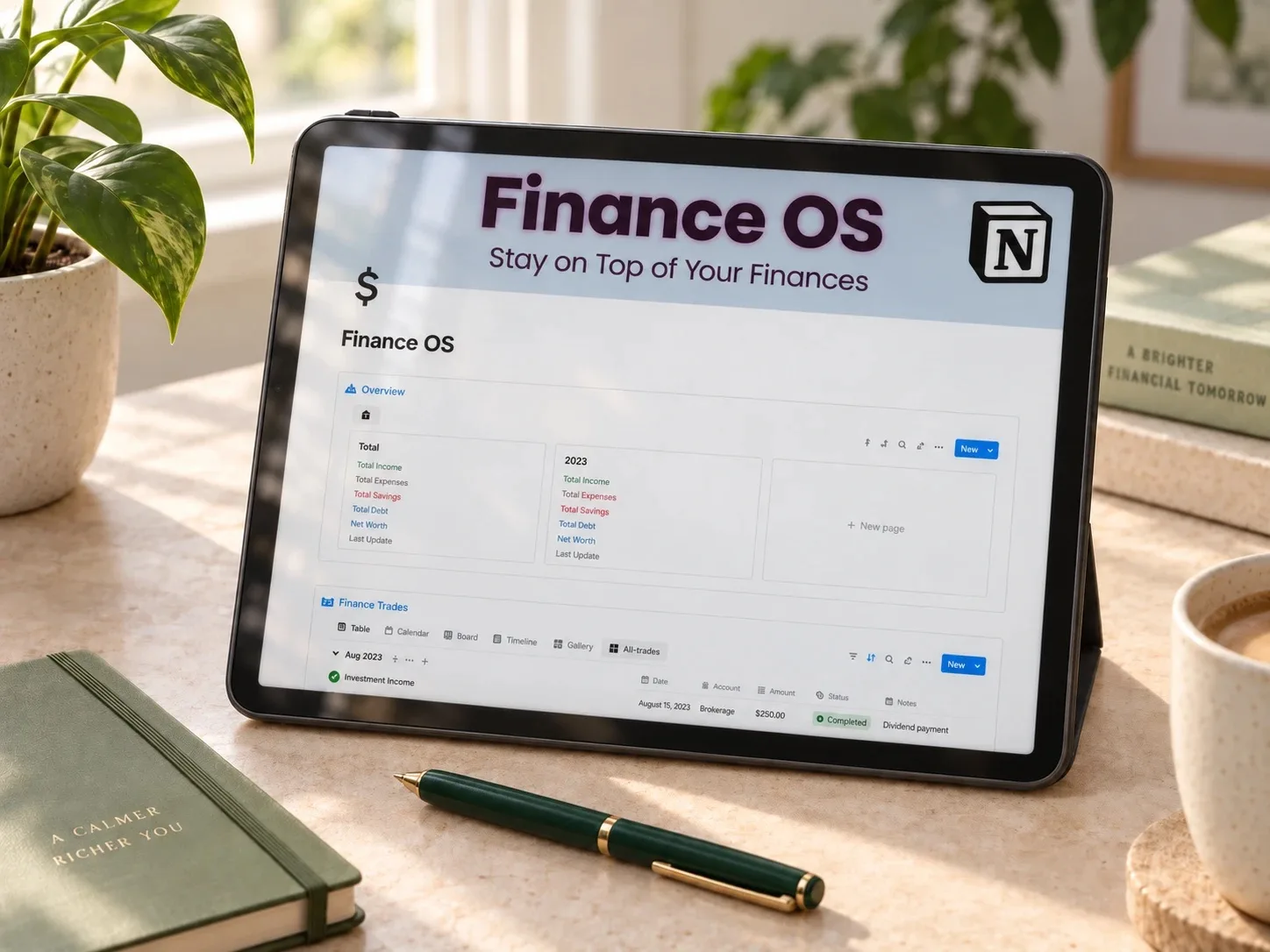 Renewal dates
Finance OS Tracker
Includes a subscription tracker with renewal dates alongside income, expenses, and account balances — built to catch a renewal before it arrives as a surprise.
Read the planner guide →Questions people ask before starting
What if I genuinely use most of my subscriptions?
Then the list confirms that, which is still useful — you finish with a confirmed monthly total instead of a guessed one.
How far back should I check statements?
Two months usually catches monthly subscriptions; check a full year at least once to catch annual ones.
Should shared family subscriptions be split in the tracker?
List the full cost and note who it is shared with, so the tracker reflects what actually leaves your account.
Start with one statement tonight
Open last month's card statement and circle every recurring charge you see, including the ones you almost skip past. That circled list is the beginning of a full picture — the annual ones can wait for a slightly longer look this weekend.
Written by Calm Budgets