
Zero-based does not mean zero in your account. It means zero dollars without a plan.
A zero-based budget sounds strict, but the idea is simple: before the month starts, every dollar of income gets a job — bills, groceries, savings, fun money, even a small "whatever comes up" line. Income minus assigned dollars equals zero.
It does not mean spending everything. Savings is a job too. It means nothing is left floating without a plan.
Why "leftover money" disappears
In a typical budget, whatever is not assigned to a bill sits in the account as vague available money. That money rarely survives the month; it slowly turns into small purchases nobody remembers deciding on.
Zero-based budgeting removes the vague category. The question changes from "what's left?" to "what is this dollar for?"
Zero-based does not mean zero in your account. It means zero dollars without a plan.
How to build one in five steps
- Write down this month's expected income — only money you are confident will arrive.
- List fixed bills first: rent, utilities, insurance, minimum debt payments.
- Assign savings next — emergency fund, sinking funds, extra debt payments.
- Assign flexible categories: groceries, transport, personal spending.
- Adjust until income minus assignments equals zero. If you are over, reduce flexible categories; if you are under, give the remainder a job.
Include a small buffer line
Strict budgets break when real life happens. A modest "miscellaneous" or buffer line — $50 or $100 — absorbs the small things you did not predict without forcing you to rebuild the whole plan mid-month. It is still a job: catching surprises.
Adjust during the month without guilt
If groceries run over, move money from another flexible category and write down the change. The budget still adds to zero; it just reflects reality now. Zero-based budgeting is a planning tool, not a test you pass or fail.
A short weekly check
- Log what you spent against each category.
- Check which categories are running low before they run out.
- Move money deliberately if you need to, and note why.
A realistic example
Imagine $3,800 of monthly income. Fixed bills take $2,150. Savings and extra debt payments get $500. Groceries $450, transport $220, personal spending $200, subscriptions $80, and a $200 buffer. That adds to exactly $3,800. When a friend's birthday dinner comes up, $40 moves from the buffer — and the plan still balances. This is an illustrative example, not a reported personal result.
What usually goes wrong
- Budgeting income you have not received yet. Plan with confident amounts only.
- No buffer. The first surprise makes the whole method feel broken.
- Forgetting non-monthly costs. Give sinking funds their own lines.
- Treating a moved dollar as failure. Adjusting is part of the method.
A tracker built around income, expenses, and categories
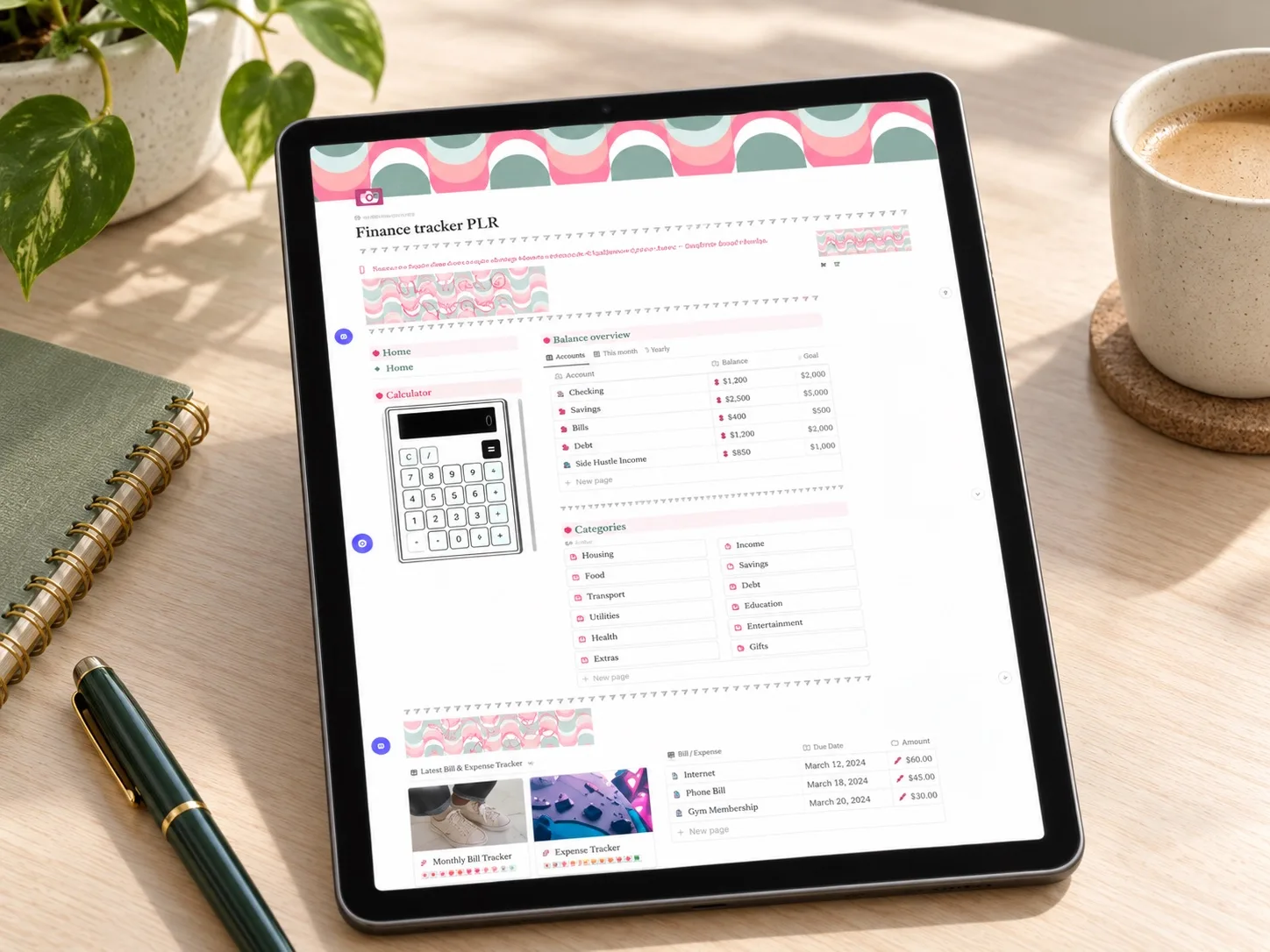
Zero-based budgeting needs three things: an income line, clear categories, and a way to log spending against them. A focused Notion finance template covers exactly that:
 Every dollar a job
PLR Finance Tracker
Income, expenses, editable categories, and a savings tracker — the core pieces of a zero-based plan, without a large workspace around them.
Read the planner guide →Questions people ask before starting
Is zero-based budgeting good for beginners?
It can be, especially after one week of simply tracking spending. Real numbers make assigning categories much easier.
What if my income changes month to month?
Build the budget on your lowest realistic income, then assign any extra to savings or a specific goal when it arrives.
Do I need to track every coffee?
You need categories accurate enough to make decisions. Small purchases can sit inside a broader personal spending line.
Start with next month's income
Write down the income you are confident about for next month. Then give the first dollar a job — rent, usually — and keep going until nothing is left without a plan.
Written by Calm Budgets