
Work on one task for 25 minutes, take a real 5-minute break, and after four rounds rest longer. Counting finished rounds shows what a day can really hold.
What the Pomodoro Technique is
The Pomodoro Technique is a time-management method created by Francesco Cirillo in the late 1980s. It is named after the tomato-shaped kitchen timer he used as a student (pomodoro is Italian for tomato). The idea is simple: work on one task in short, timed rounds and take a real break between them.
Each 25-minute round is called a "pomodoro". Four of them, with breaks, take about two hours, which is a realistic block for one serious piece of work.
How to do it, step by step
- Choose one task. Write it down before starting the timer.
- Set a timer for 25 minutes and work only on that task.
- If a distraction comes up, write it on a paper "later" list and go back to work.
- When the timer rings, stop and take a 5-minute break away from the screen.
- After four rounds, take a longer 15–30 minute break.
- At the end of the day, count how many rounds you finished. That number is your real capacity.
The break is not optional. Standing up, drinking water or looking out of a window is what lets the next round start fresh. Scrolling your phone usually is not.
Why it works for so many people
A 25-minute round is short enough that starting feels easy, even on a task you have been avoiding. A visible timer turns "work on the report" into "one round on the report", and counting finished rounds shows where the day actually went. That last part is the same principle behind a good budget: you can only plan well once you can see what really happens.
Popular variations
| Method | Work | Break | Good for |
|---|---|---|---|
| Classic Pomodoro | 25 min | 5 min, long break after 4 | Starting hard tasks, studying, admin |
| 50/10 | 50 min | 10 min | Writing and design once you are warmed up |
| 52/17 | 52 min | 17 min | Deep work with fewer, longer breaks |
| 90-minute blocks | 90 min | about 20 min | One big project per morning |
There is no correct number. Start with the classic 25/5 for a week, then adjust. If you are regularly in the middle of something when the timer rings, try longer rounds.
Try it on your money first: the one-pomodoro money check-in
Money tasks are a perfect first test because they are the kind people postpone. One 25-minute round is enough for a weekly check-in:
- Minutes 1–10: log this week's income and expenses.
- Minutes 11–18: look at bills and subscriptions due in the next seven days.
- Minutes 19–25: choose one money action for the week and write it down.
For the full routine, see A 15-minute weekly money check-in.
How to track your pomodoros in Notion
You do not need a special app. A small Notion database is enough:
- Task: what you are working on.
- Date: when you worked on it.
- Planned: how many rounds you expected it to take.
- Done: how many rounds it actually took.
- Interruptions: a quick count or note.
After two weeks, compare "Planned" with "Done". Many people discover they underestimate tasks, and that information makes the next week's plan more honest.
Notion templates that pair well with Pomodoro
If you would rather start from a ready-made workspace, these templates reviewed on Calm Budgets have a place for daily tasks and focus:
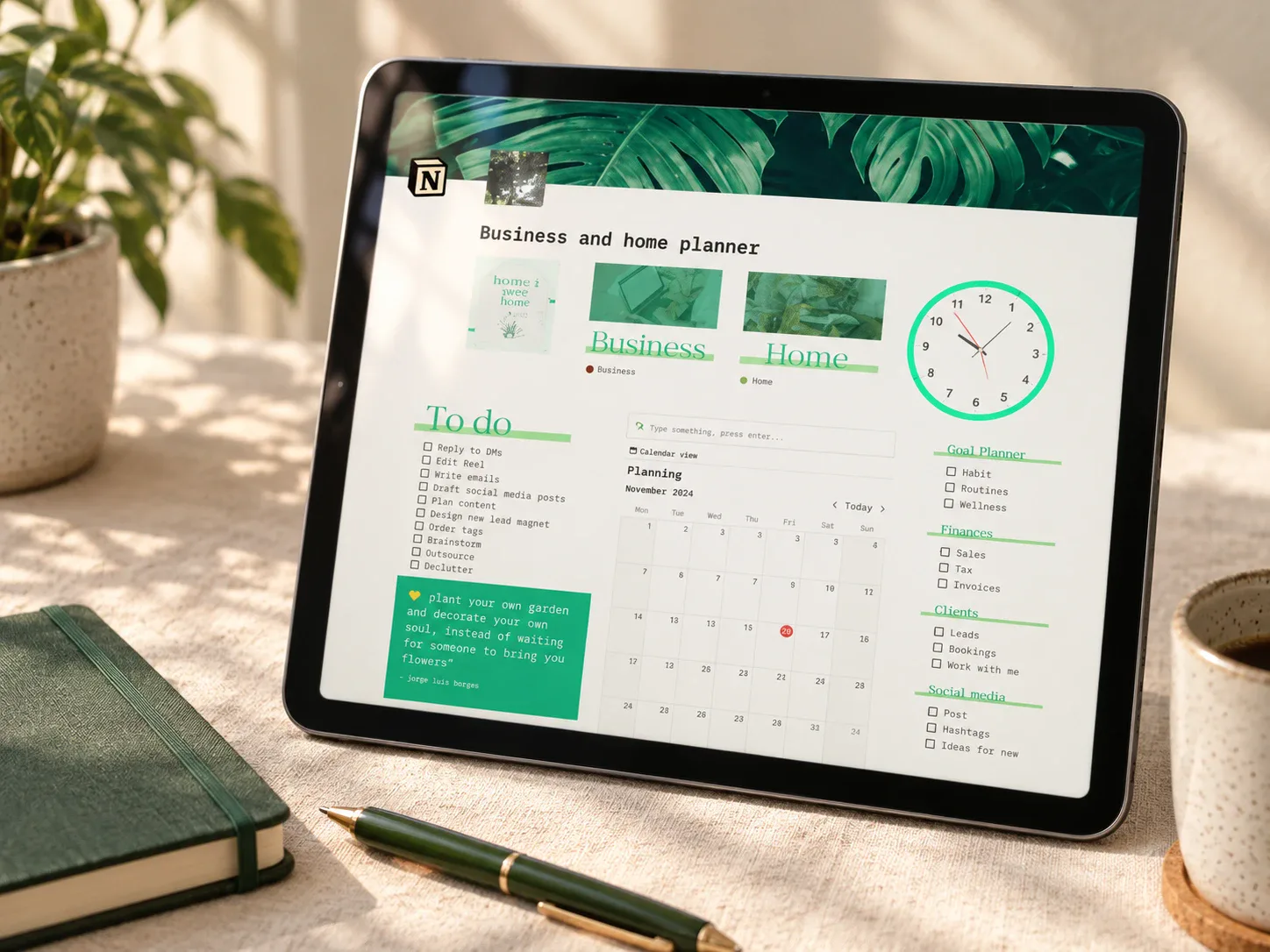 Has a Pomodoro timer
Aesthetic Home & Business Planner
The listing includes a Pomodoro timer and a lo-fi playlist link, next to home to-dos, business goals, clients and a finance tracker.
Read the planner guide →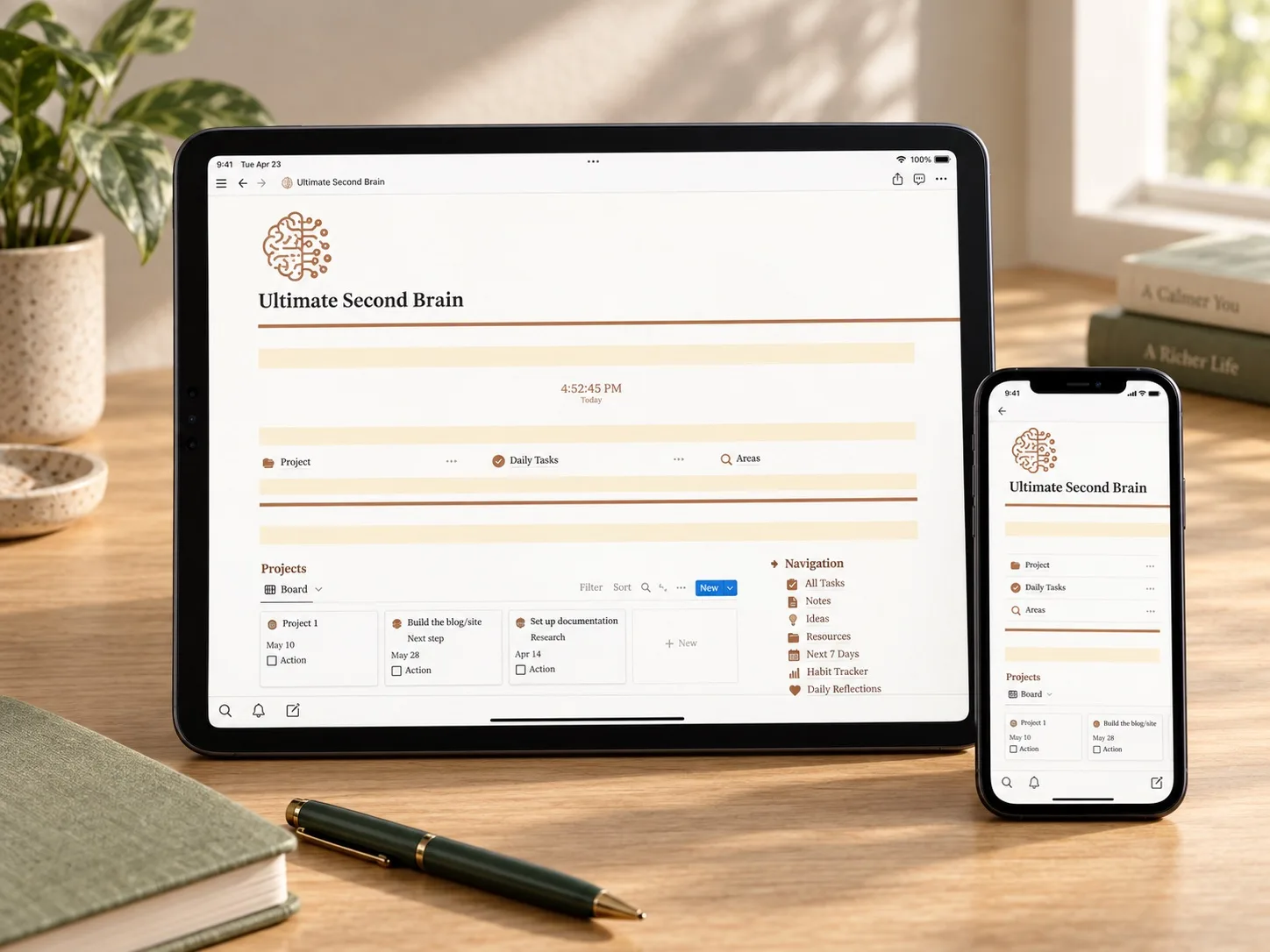 Daily priorities
Notion Ultimate Second Brain
Daily tasks, priorities, an inbox and the next seven days on one dashboard: a natural place to pick each round's task.
Read the planner guide → Goals to weekly numbers
12 Week Year Planner
Turns one goal into weekly plans and reviews. Pomodoros answer "how do I start today", this answers "what am I working toward".
Read the planner guide →Common questions
What if a task takes less than 25 minutes?
Group several small tasks, like replies and quick payments, into one round.
What if I get interrupted?
If the interruption can wait, write it down and continue. If it can't, stop the round and start a fresh one later. A half round doesn't count.
Is 25 minutes too short for deep work?
For some people, yes. That is what the 50/10, 52/17 and 90-minute variations are for.
Start with one round today
Pick the task you have been putting off the longest, set a 25-minute timer, and do one round. Nothing more. The method only has to work once to become easy to repeat.
Save the idea for later
A small reminder for your next planning session.
Save to Pinterest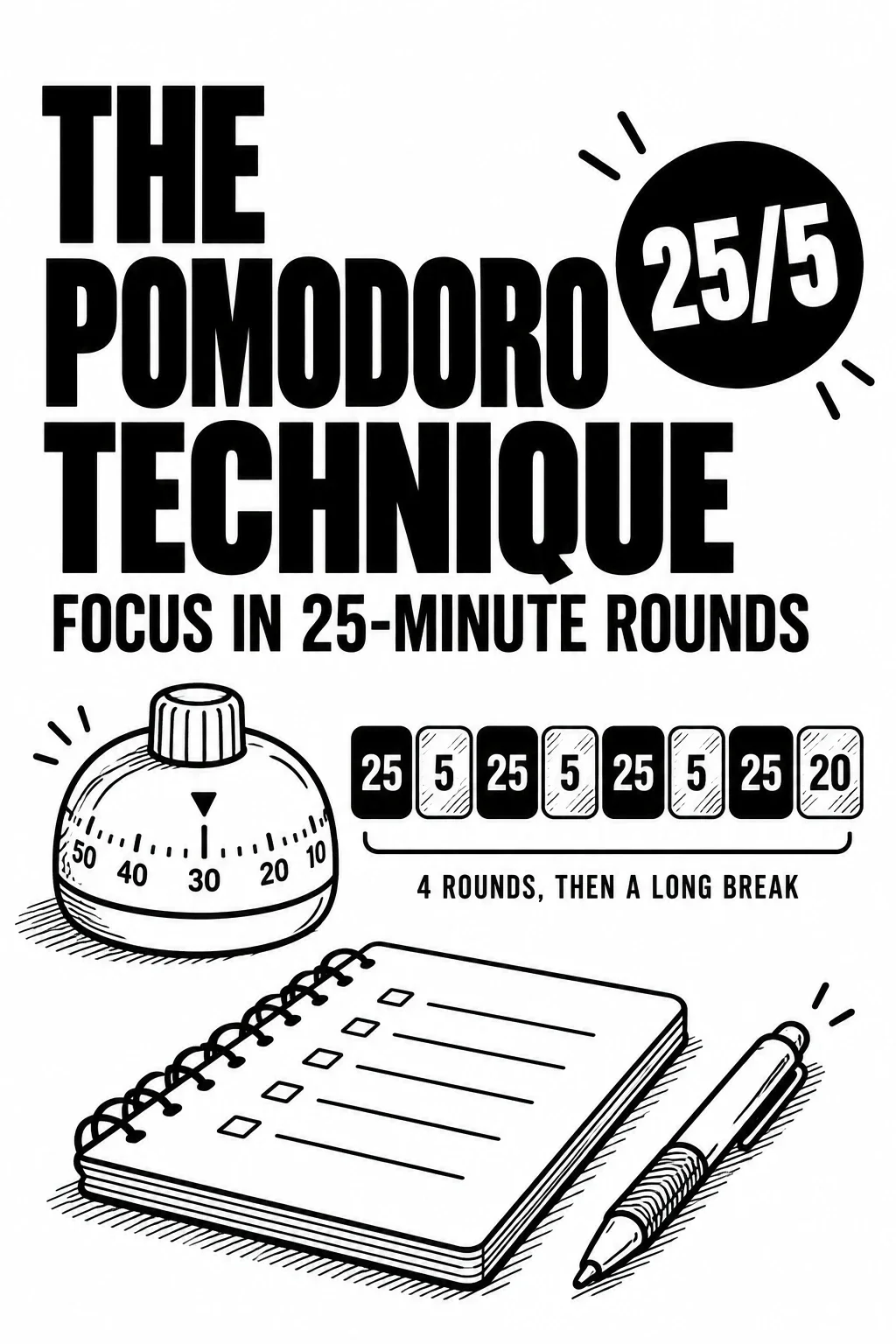
Written by Calm Budgets