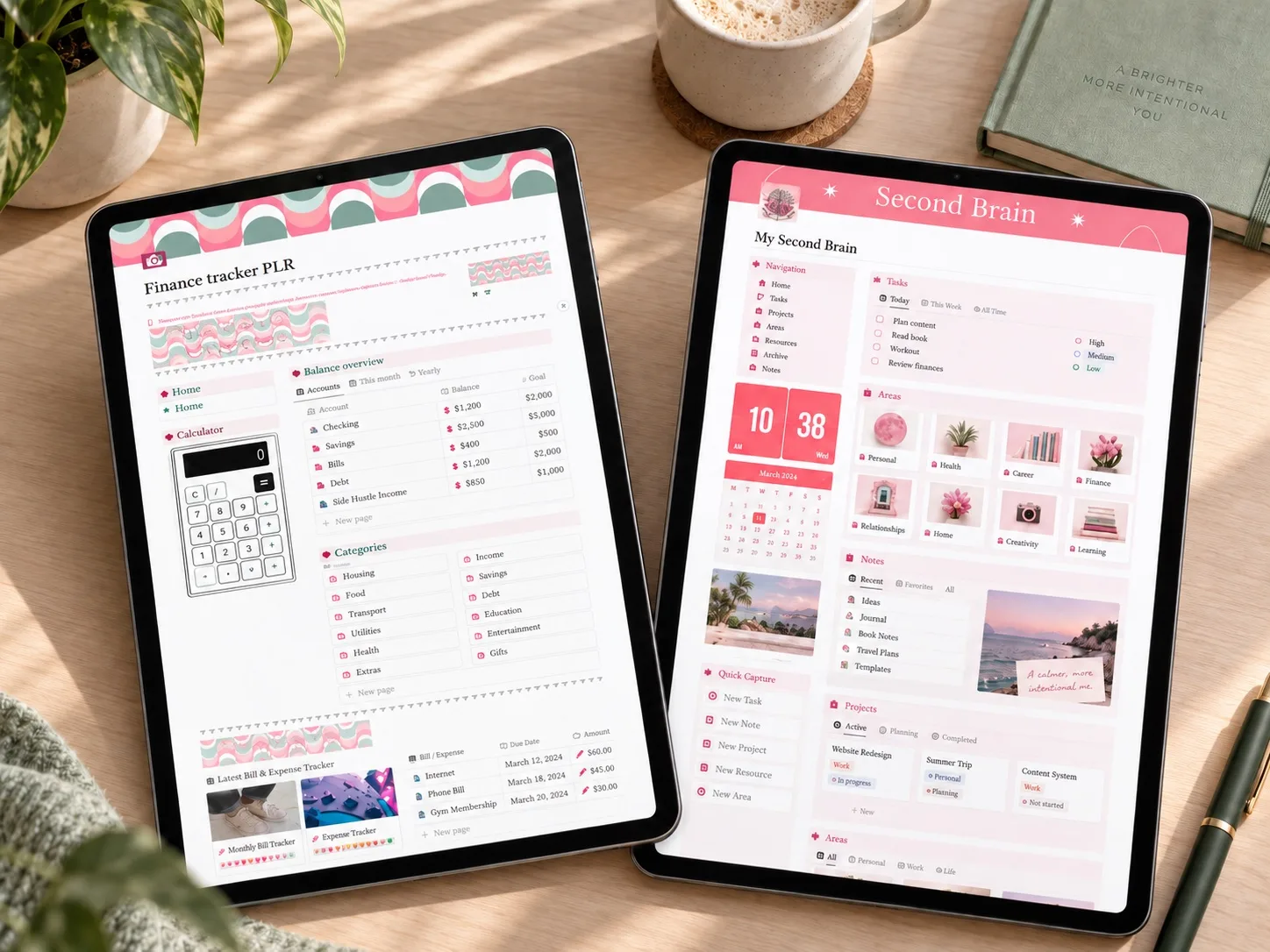
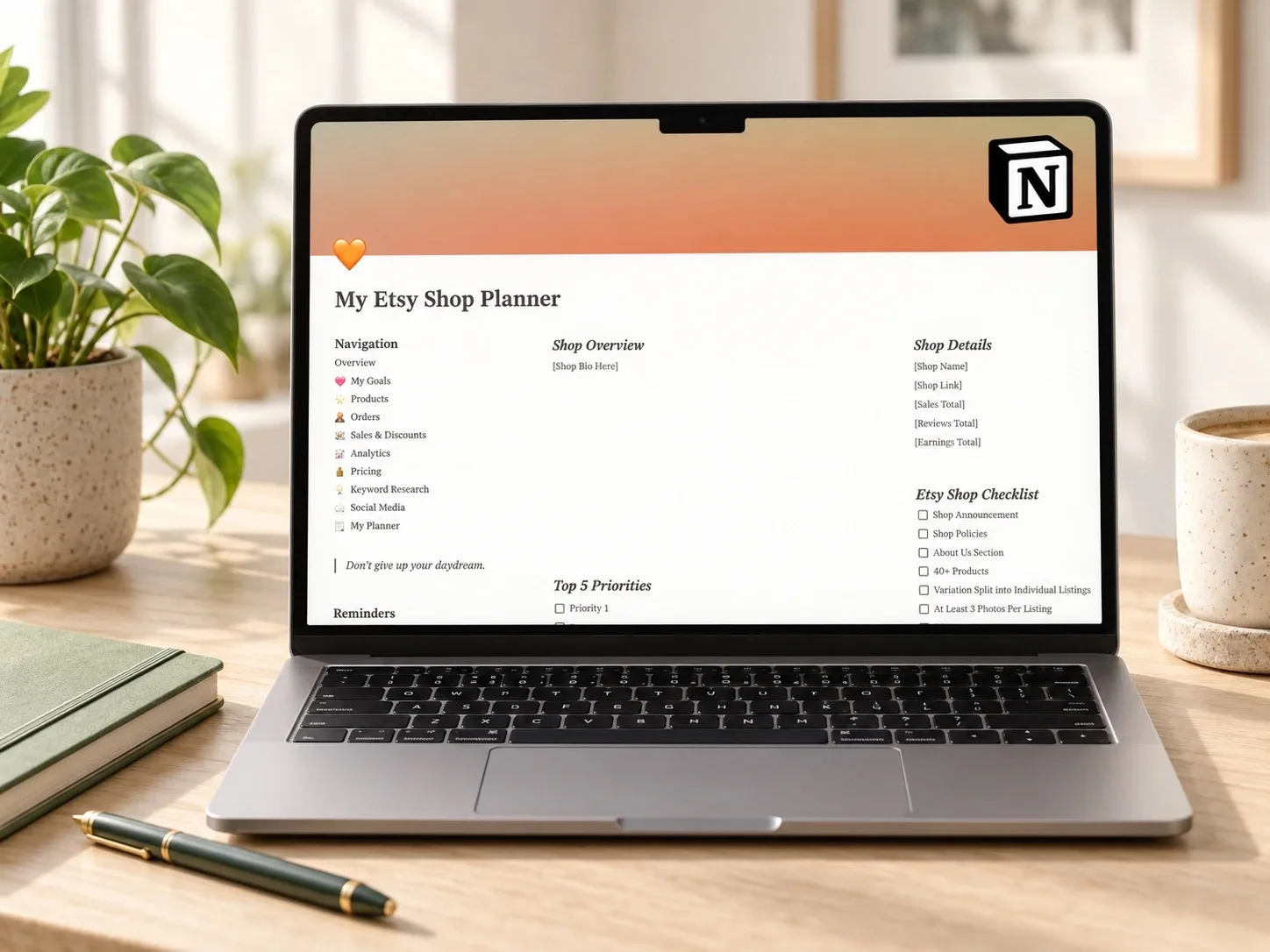
A life planner is not "more organized." It is useful specifically when money decisions depend on information outside a finance tracker.
Somewhere between a single budget tracker and a full life-organization system, most people end up choosing the wrong size — either a tracker too narrow to hold what they actually need, or a life planner with more sections than they will ever open.
This is a way to answer the question before buying either one: do you actually need a full life planner, or is the budget the only part that matters right now?
The signal that you have outgrown a single tracker
A focused money tracker works well until your weekly review keeps spilling into things it was never built to hold — a project deadline that affects your spending, a cleaning schedule tied to a hosting income stream, travel planning that needs to sit next to a savings goal for the same trip.
If your finances keep needing context from other parts of life to make sense, that is the actual signal to look at a broader system — not a preference for more features, but a real gap in what the narrow version can show you.
A life planner is not "more organized." It is useful specifically when money decisions depend on information that lives outside a finance tracker.
What a life planner actually adds over a finance tracker
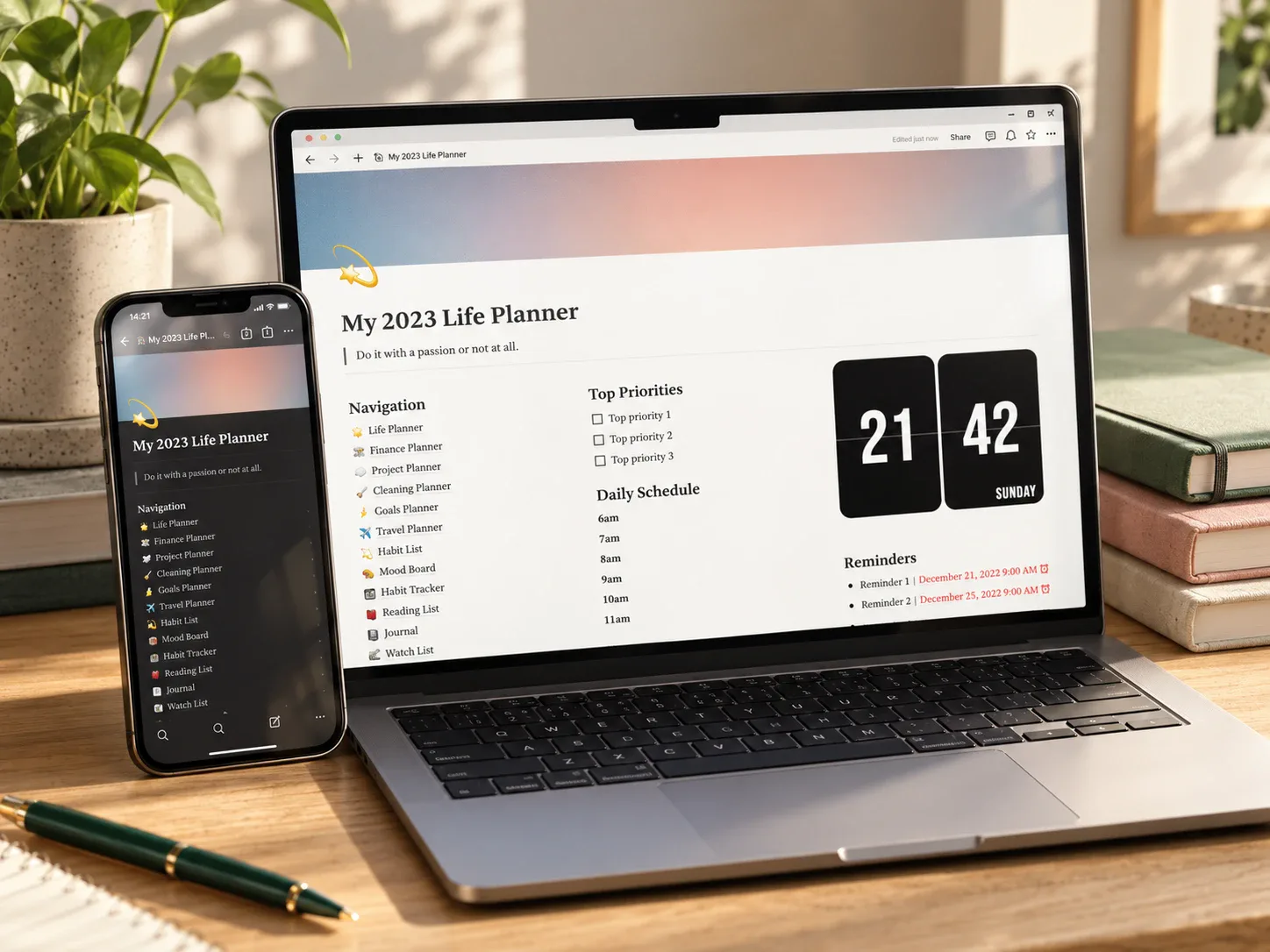
A typical all-in-one setup pairs a finance section with a monthly planner, a project or task tracker, a cleaning or household schedule, a travel section, and a habit tracker — all referencing the same calendar and the same goals page.
The value is not any one section on its own. It is that a savings goal, a project deadline, and a travel plan can sit next to each other instead of living in three unrelated tools that never talk to each other.
Who this actually fits
- Someone juggling money alongside projects. A freelancer or small business owner whose income and task list are tightly connected.
- A household managing shared goals. Cleaning, budgeting, and travel planning that genuinely affect each other.
- Someone who already tried and abandoned a narrow tracker specifically because it left out something they needed nearby.
It fits poorly for someone who only wants a weekly money check-in — that person is better served by the focused tracker they already have, with fewer sections to maintain.
A simple monthly check
- Open the one workspace. Finances, projects, and household tasks in the same place.
- Scan for what connects. A goal that needs a task, a task that needs a budget line.
- Update one section fully rather than all of them lightly. A life planner touched everywhere but updated nowhere becomes clutter fast.
A realistic example
Imagine someone who tried a finance-only tracker for six months. It worked for tracking spending, but a home renovation project kept needing its own separate notes app for tasks and its own spreadsheet for costs — three tools for one connected goal. Moving to a single life planner put the renovation budget, its task list, and its timeline on the same page, and the separate tools quietly stopped being necessary. This is an illustrative example, not a reported personal result.
What usually goes wrong with a life planner
- Adopting one before actually needing the extra sections. Unused sections become maintenance weight, not organization.
- Filling in every section shallowly instead of a few sections well. A half-updated system is harder to trust than a smaller, current one.
- Switching from a working tracker out of boredom, not need. If the narrow version still answers your real questions, the upgrade adds cost without adding value.
If the broader system fits your situation
 Full life planner
Notion Dashboard Life Planner
A finance planner sitting alongside a monthly planner, project planner, cleaning planner, travel planner, and goals page — for readers whose money decisions genuinely depend on the rest of their schedule.
Read the planner guide →Questions people ask before starting
Can I use just the finance section and ignore the rest?
Yes, but if that is the plan, a dedicated finance tracker is usually simpler to maintain than an all-in-one system with unused sections.
Is switching systems disruptive?
Some transition cost is normal. It is worth it only if the narrow tracker was genuinely missing something you needed, not out of curiosity alone.
How do I know if I am using too many sections?
If a monthly review takes far longer than the value it provides, that is a sign to trim back to what you actually check.
Start with one honest question tonight
Ask yourself what your finance tracker has never been able to show you — a project, a schedule, a shared household goal. If nothing comes to mind, stay with the focused tracker. If something does, that gap is your answer.
Written by Calm Budgets